Where Your Soul Was Before Birth – What the Bible Reveals
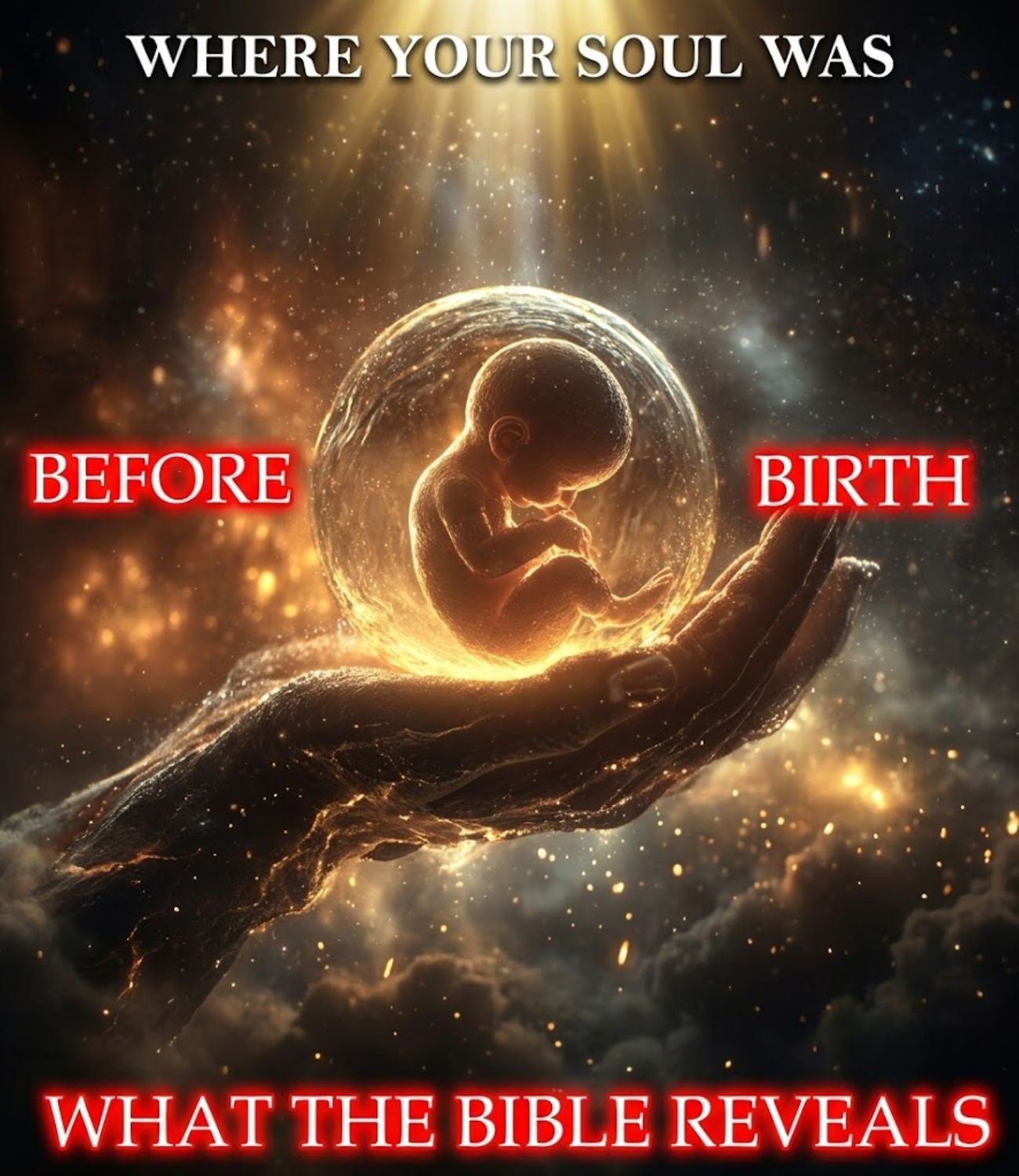
Have you ever been alone late at night when everything grows quiet and your mind drifts to questions you don’t often ask?
Maybe one of them sounds like this: Where was I before all of this? Not before school or childhood, but before your very first heartbeat, before you ever opened your eyes, before anyone knew you were coming into the world. It’s not a question most people dwell on. Yet, it might be one of the most important questions we could ever ask, because when you understand where your soul truly began, you start to see your entire life in a new light.
The Bible reveals something both intimate and awe-inspiring. Long before the Earth took shape, before the first sunrise, before the galaxies spread their stars across the heavens, you were already known. Not as a vague idea or anonymous potential, but personally by name by the God who made you.
And that one truth changes everything.
If you’ve ever felt invisible, unwanted, or like your life is one long accident, then this truth will feel like fresh air for your soul. It means your story began in the very heart of God.
So where was your soul before birth? What does the Bible actually reveal about your beginning? And why did God choose to send you into this world at this moment in time?
Let’s explore this mystery together. By the end, you may never see yourself or your life the same way again.
Roll the clock back past your first memory, past your first breath, past the first light ever cast across the universe. And what do we find? Intention.
The Bible says that before the foundation of the world, God chose us in Christ and planned our adoption as His children. That means your story didn’t start with people. It started with purpose.
Being chosen does not mean favoritism. It means love moved first. Long before you could respond or resist, God set His love upon you. His plan was not simply that you would exist, but that you would belong—that you would be brought near, named, welcomed, and secured in His family through Jesus. Adoption is family language. It means God wanted you not as a distant creature, but as a son or daughter.
This plan dignifies your will rather than deleting it. God’s choice sets the table; it does not force you to eat. Grace opens a door prepared long before you ever knew to search for it. Faith is the step that carries you through that door. Your response matters deeply because love invites; it does not coerce.
Listen to how God spoke to Jeremiah:
“Before I formed you in the womb, I knew you.”
He doesn’t say, “I noticed you when others did.” He says, “I knew you.” To be known by God is more than being observed. It is to be delighted in, understood completely, and set apart with purpose.
Why does this matter? Because the story you live is shaped by the story you believe. If you think you are an accident, you will live like one—drifting, guarded, and fearful. If you believe you were planned in love, you will begin to walk in a quiet boldness that doesn’t need applause to keep going. Shame loosens its grip when you realize your origin is not your failure or your wound, but the steady will of God.
You may feel late, as if you missed your moment, but what God purposed before time is not threatened by time. He knows how to meet you in the middle. You’re not behind schedule. You are held by a Father who is never anxious.
Take a breath. Let it sink in.
Before there was a world to stand on, there was a Father who wanted you. Before you had a heartbeat or a name, before your parents ever felt your first kick, God already knew you.
Psalm 139 gives us one of the sweetest pictures in all of Scripture:
“You knit me together in my mother’s womb.”
Knitting is patient work. It is intentional and careful. That is how God describes your formation—not rushed, but crafted. God saw your unformed body. He counted your days when there were none of them yet.
That means your worth was never something you had to earn. It was bestowed from the beginning. You didn’t receive value as a reward; you were born with it as a gift.
Maybe you’ve carried cruel words that made you feel small—someone calling you a mistake or treating you like a burden. Those words are not your truth. The truth is that before you were visible to the world, you were visible to God. He didn’t see a cluster of cells; He saw a person, a life bearing His image with a soul worth His attention and care.
To be known means to be seen, understood, and loved. Many people know your name; few know your heart. God knew both your joys and fears, your wounds and gifts, and still wanted you here. Even the parts of yourself you’d change if you could—the depth of your feelings, the way you think, the way you notice what others miss—these are not flaws in His eyes. They are strands of design.
You are not invisible. You are not random. You are seen. And the One who saw you then still sees you now—your questions, your private tears, your hopes you barely dare to say aloud. The God who watched over your first day is guiding this one. When you feel lost or overlooked, remember your beginning: you started in the hands of a God who knows you better than you know yourself and who has never stopped caring.
If God planned you and formed you, where did your soul come from? Scripture answers with clarity from God Himself:
“The dust returns to the earth as it was, and the spirit returns to God who gave it.”
Your life is not an accident of chemistry. Your spirit is a gift breathed forth by God’s will. Consider the first human:
“Then the Lord God formed the man of dust from the ground and breathed into his nostrils the breath of life, and the man became a living soul.”
Life did not happen until God breathed. The nearness here is intimate, almost face to face. That breath is not a one-time artifact of ancient history; it is the pattern of human life. Every soul bears the imprint of the Giver.
This is why human life carries profound dignity. You are more than biology, more than your DNA, more than the push and pull of a material world. There is something in you that came directly from God: your spirit, your eternal self. And that is why you long for more than survival. Your soul remembers its source.
This truth brings comfort when you feel hollow or disconnected. You were not designed to run on your own. A light bulb does not shine without the current; likewise, your spirit is most alive when it is connected to God. Life feels heavy when we live cut off from the breath that animates us.
Zechariah 12:1 calls God the One who forms the spirit of man within him. Your soul is not recycled energy or borrowed stardust. It is crafted for you, in you, with a purpose marked by your unique design. That is why your life is precious. No matter your background, your failures, or your pain, you carry the stamp of the Maker.
And the hope is this: the God who gave you your spirit is the One who holds it secure. Bodies grow weak, circumstances shift, and seasons change. But the life within you came from Him, is known by Him, and is safe in His care.
If your soul came from God, why send it here into this time, this family, these exact conditions? The Bible tells us God does nothing without purpose. Your life is not an accident on the road to eternity; it is a chapter in a grand story.
From the beginning, God said, “Let us make man in our image.” You were created to reflect something of God that no one else can reflect in quite the same way: to love, create, choose what is good, and know Him personally. You are here to bear His image in a world starving to see Him.
Your time on earth is also your mission field. Acts 17:26–27 says God determined the times and places where people would live so that they might seek Him and find Him. That means your being here now is not random. You live where you live because somewhere in this place and season, God intends to meet you and to reach others through you.
We often wish for an easier life, a different era, or a better start. But what if you are exactly where you need to be for the story God wants to write through you? Your struggles and strengths, your gifts and scars, become threads in a tapestry meant to reveal His glory.
God doesn’t send a soul and then walk away; He walks with us. He has given us His word to guide, His Spirit to strengthen, and His Son to redeem. Every day is a chance to discover why He placed you here and to live that calling with courage. Your life is not a puzzle missing pieces; it is a masterpiece in progress. And even the dark strokes will one day serve the light.
Do not think of your arrival as mere permission granted. You were sent. And being sent means purpose. You’re not the background of someone else’s story. You are a person of holy intention crafted to carry God’s likeness into your corner of the world.
When we say God knew us before we were born, some ask: Did my soul live somewhere else first? Did I have thoughts or memories before birth?
Various philosophies teach conscious pre-existence or cycles of reincarnation. But the Bible speaks with careful clarity. Scripture teaches that God foreknew and chose His people before creation. It emphasizes that we were secure in His plan and His heart. However, the Bible does not describe us as fully conscious persons before our earthly lives. There is no verse that says we wandered in heaven awaiting assignment. The focus is not on an active personal pre-life, but on God’s eternal knowledge and purpose concerning us.
Hebrews 9:27 offers a crucial boundary:
“It is appointed for man to die once, and after that comes judgment.”
Scripture presents life as a single earthly journey, not an endless cycle of returns to try again. That can feel sobering, but it is also good news. Your life matters now. Your choices carry weight. Your years are meaningful and sacred.
What about infants who die or those whose lives are heartbreakingly brief? Psalm 139:16 assures us that all our days were written in God’s book before one of them came to be. No soul is wasted. God’s knowledge and care extend beyond what we can see or understand.
There are mysteries we won’t solve here. Deuteronomy 29:29 reminds us:
“The secret things belong to the Lord our God, but the things that are revealed belong to us.”
What God has revealed is enough to trust Him. He is good, wise, sovereign, and loving. He knew you before time, placed you here in love, and will bring His purposes to completion.
So while Scripture does not teach a conscious pre-birth life for our souls, it does proclaim something even stronger: we were never unknown, never forgotten, never outside the plan of God. And that is enough to live with peace.
At a precise moment in history, not by accident or fate, God entrusted your soul to a body. “You knit me together in my mother’s womb.” Your beginning was not merely biology; it was a sacred event woven with divine intention.
Luke’s Gospel offers a tender window into this mystery. When pregnant Mary visited Elizabeth, the baby John leaped in the womb at the sound of Mary’s greeting because he was already responding to Jesus. Even before birth, John’s life recognized the presence. That tells us two things: life in the womb carries profound dignity, and God’s work in a person can begin before their first cry.
Your life started with that same dignity—a soul known by God and a body crafted by His design. You were not simply allowed to be born; you were sent. Being allowed sounds passive, like something that happened to you. Being sent means mission: on purpose, for purpose.
This reframes our stories, especially for those whose beginnings were complex—unexpected pregnancies, difficult family situations, or early hardships. Your story does not start with human hesitation or chaos; it starts with a God who knew your name and timed your arrival. And He has not lost track of you since.
The same God present at your beginning is present now, attentive to what you face, faithful to complete what He started.
This also reshapes how we see others. Every person you pass, regardless of age, status, or ability, carries a soul given by God and placed in a body by His will. That is why life is precious from the very start. It is not mere potential; it is personal—a God-given story already underway.
So don’t reduce your origin to a date on a certificate. Think of the moment when heaven’s decision met your first heartbeat, when God’s plan and your story intertwined. That was the opening line of your earthly chapter—proof that you are here on purpose.
If God sends souls with purpose, it is no surprise there is a battle to oppose that purpose. From Genesis onward, what God creates, the enemy tries to destroy. Life is precious to God; therefore, it becomes a target for Satan.
Consider the birth narratives: Pharaoh ordered Hebrew baby boys killed in the days of Moses. Herod ordered the killing of boys in Bethlehem in the days of Jesus. These are not random acts of cruelty; they reveal a pattern. When God is raising a deliverer, the enemy aims at the cradle.
Many people carry early life wounds—feelings of rejection, fear, abandonment, or shame that seemed to appear before they had words for them. The enemy plants lies early because he fears the image and purpose you carry.
But your presence here is a counter-testimony. You survived. The fact that you are reading this is evidence that God’s purpose outlasted the opposition.
The battle still rages in our time: debates around the beginning of life, violence against the innocent, cycles of despair. Yet the Gospel announces a brighter truth:
“The light shines in the darkness, and the darkness has not overcome it.”
God’s purposes exceed the enemy’s schemes. Let this embolden you: you were fought over and kept. The very existence of resistance is a sign of your value. Hell does not waste its energy on what does not matter. If your soul has been opposed, it is because your life carries meaning in God. You are part of a story so significant that heaven and hell took notice the moment you arrived.
So when discouragement whispers that you are late, unworthy, or invisible, answer with this: Heaven said yes to my life, and what heaven authors, heaven sustains.
Your soul was known, formed, and sent. But that is not the end of the story. Knowing where you came from is meant to point you toward where you are going. God did not send you here to drift, perform, or disappear. He sent you so that you could know Him, walk with Him, and be restored to Him forever.
This is why Jesus told Nicodemus, “You must be born again.” You already had a first birth when God joined your soul to a body. But Jesus invites you to a second birth—a spiritual rebirth into the family of God. In Christ, you do not just turn a page; you become a new creation. Your past does not get the last word. Grace does.
When this reality takes root, even the painful chapters take on meaning. Suffering is not senseless; it becomes the ground where God proves His faithfulness. Your lingering questions become places to encounter His wisdom. Your detours become doorways, turning points that draw you nearer to Him.
And this invitation is for today. You don’t need all the answers. You don’t need to make yourself worthy. The same God who knew you before birth is here now to forgive, to steady, to lead. Where you came from matters, but where you go next matters even more. Your true beginning in God’s heart is meant to lead to a true destiny: life with Him now and forever.
Thank you so much for staying with us until the end of this journey. Your presence here means more than you know. If today’s message inspired or comforted you, please subscribe to this channel, click like, share your thoughts in the comments, and share this video so others can be encouraged, too. And don’t forget to turn on the notification bell so you won’t miss the next Bible story that will strengthen your faith and bring you closer to God.
When night falls and your eyes grow heavy, something deeper than your body begins to stir.
We often think of sleep as a simple physical necessity. Yet in the unseen realm, it is anything but ordinary. Every night your body rests, but your soul remains awake. The night is not just a break from daylight. It is a sacred threshold, a place where heaven still speaks, where battles are fought, and where God whispers to the listening heart.
Have you ever asked yourself what truly happens when you close your eyes? Not to your body, but to your soul—the eternal part of you that will one day outlive the flesh.
This video takes you to look at sleep through the lens of Scripture and discover what the night reveals about your spiritual life. Before we dive in, if you’ve ever felt that the night carries a mysterious spiritual depth, type 77 in the comments; it’s our little symbol for spiritual awakening. Let’s go.
The Bible makes it clear that the body and the soul are not the same. Our bodies are made from dust—fragile, temporary, and destined to return to the earth. But within that fragile frame lives something eternal: the spirit, the breath of God that gives us life.
The body grows weary and must lie down, but the soul never truly sleeps. Even when your eyes close and your heartbeat slows, your spirit remains awake, still aware, still connected to both heaven and earth.
Paul reminds us that to be absent from the body is to be present with the Lord. That truth gives us insight into the mystery of what happens when the body rests. Even death itself, which Scripture often calls sleep, does not silence the soul. The spirit continues its journey alive in the presence of God. If that is true in death, then surely in sleep our inner life remains alert—sensitive to divine whispers, open to heavenly influence, or vulnerable to the shadows that linger in the unseen realm.
In Genesis 28, Jacob experienced this mystery firsthand. Alone in the wilderness, he lay down with nothing but a stone for a pillow. His body was still, but his spirit entered a realm beyond the natural. In that quiet place, heaven opened before him: a ladder reaching upward, angels ascending and descending, and the Lord standing above it.
When Jacob awoke, he cried out:
“Surely the Lord was in this place, and I did not know it.”
How many nights have we too slept through divine moments, unaware that God was near? Sleep is more than rest. It is revelation. It strips away our control, silences logic, and lowers the defenses we build in daylight. In that sacred vulnerability, the soul can be shaped, drawn toward holiness by the Spirit or swayed by darkness. The night, then, becomes a mirror of the soul. It reveals where we truly belong, reminding us that even in our deepest rest, God is still speaking and our spirit is still listening.
Dreams are not random flickers of the mind. They are one of the oldest and most mysterious languages through which God speaks to humanity. From the first pages of Genesis to the final visions of Revelation, God has used dreams to guide, to warn, and to reveal.
Joseph dreamed of a destiny that would one day save nations. Daniel interpreted the dreams of kings and unveiled the secrets of empires. Even Pilate’s wife, though far from the faith, was warned in a dream about the innocence of Jesus. These stories remind us that the night is not silent. Heaven still speaks when the world is asleep.
So why would God, who once spoke so clearly through dreams, fall silent in our generation?
The truth is, He hasn’t stopped speaking; we’ve stopped listening. In a world flooded with noise and distraction, the gentle voice that whispers in the night is easily drowned out. Yet the language of dreams remains one of God’s most personal ways of reaching the human heart.
Dreams are rarely literal. They speak in symbols, colors, and impressions that stir something deeper than reason. God uses this poetic language to bypass our intellect and speak directly to our spirit. Proverbs 25:2 tells us:
“It is the glory of God to conceal a matter and the glory of kings to search it out.”
Dreams belong to that divine mystery—not meant to confuse, but to invite us to seek, to pray, and to discern.
Still, not every dream carries a heavenly message. Some arise from our own worries or desires, while others may be shaped by darker influences. The enemy has always sought to imitate what God creates, crafting counterfeit visions to plant fear or temptation. That is why discernment is vital.
Before you close your eyes, pray:
“Lord, if You wish to speak tonight, I am listening. Protect my mind. Reveal what I need to know.”
And when you wake, take note of what you saw. Joseph’s gift of interpreting dreams lifted him from prison to the palace. Daniel’s insight preserved his life in Babylon. Even the infant Jesus was spared because Joseph obeyed an angelic warning in a dream. If God could direct destinies through dreams then, He can still do so now. Every night, heaven is speaking. The question is: are we still listening?
The night is more than a time for rest; it is also a realm of revelation and warfare. The Apostle Paul warns us in Ephesians 6:12 that we wrestle not against flesh and blood, but against principalities, powers, and the rulers of the darkness of this world. The forces of evil thrive where light is dim and hearts are unguarded, moving silently when the world is asleep and minds are most vulnerable.
Many believers wake up weary, anxious, or unsettled without realizing that their souls may have faced unseen battles in the night. Nightmares, sleep paralysis, and repeating dreams of fear or failure are not always just the product of stress or imagination. At times, they reflect spiritual resistance.
Jesus called the enemy a thief—one who comes to steal, kill, and destroy. The thief loves the quiet hours when our defenses are down, hoping to rob us of peace before the dawn. If he can disturb our rest, he can weaken our confidence and shake our faith.
But here is the good news: the authority of Jesus Christ extends into the darkest hours. His victory is not bound by daylight. You are not defenseless while you sleep, because the One who never slumbers watches over you. The same power that conquered the grave guards your soul through the night.
Before you sleep, invite God’s covering over your rest. Speak His promises aloud and declare:
“I will not fear the terror of night.” (Psalm 91:5)
Pray that your home, your mind, and your dreams would be filled with the peace of the Holy Spirit. Command every dark influence to depart in the mighty name of Jesus. This is not superstition; it is living faith grounded in Scripture. Every believer has been given authority to stand against the powers of darkness. When you speak the name of Jesus, light pierces the shadows and evil must flee. Your bed can become either a battleground or a sanctuary. The difference lies in whether you sleep as a victim or as a warrior who knows that the Lord Himself guards your soul even in the stillness of the night.
Though the night may hold danger, it is also filled with divine protection. When the world sleeps, heaven remains awake. God’s angels do not rest. They are constantly at work carrying out His will and guarding His people. Scripture describes them as ministering spirits sent to serve those who will inherit salvation. Psalm 91:11 assures us that God commands His angels to watch over His children in all their ways, and that includes the quiet hours of rest.
They are far more than the soft, harmless images seen in paintings. They are warriors of light, powerful messengers who move at the sound of God’s command. Throughout Scripture, angels have intervened in the night to protect, deliver, and guide. When Joseph slept, an angel appeared in a dream, instructing him to take Mary and the infant Jesus to safety. When Peter lay chained in a prison cell, an angel awakened him, broke his bonds, and led him past the guards into freedom. Heaven, it seems, does some of its greatest work while the earth is still.
Sometimes the deep peace you feel in the middle of the night is not simply rest. It is protection. It may be that unseen hands are standing guard, holding back the darkness so that your spirit can truly rest.
Angels, however, do not respond to emotion or fear. They respond to God’s word. Psalm 103:20 says that these mighty beings obey His commands, listening for the voice of His word. If you want your nights to be filled with divine presence, fill your space with Scripture. Read it aloud before you sleep. Pray with faith and speak God’s promises over your home. Give heaven something to act upon: the living word of God.
Before you close your eyes, you might pray:
“Father, command Your angels concerning me. Station them around my home. Let no fear, no evil, and no torment enter this place. Surround me with Your light and let my soul rest in Your peace.”
Where God sends His angels, the enemy cannot remain. Even in the darkness, you are not alone. Heaven stands watch.
Not everyone who lies down at night finds rest. Some people are not merely tired; they are tormented. Their bodies ache for sleep, yet their minds refuse to quiet. Thoughts race, hearts pound, and dreams feel tangled and chaotic.
Scripture offers an explanation: the condition of our soul often determines the quality of our rest. Psalm 4:8 declares:
“In peace I will lie down and sleep, for You alone, Lord, make me dwell in safety.”
True rest, then, is not found in perfect surroundings, but in a peaceful spirit anchored in God. Isaiah 57:20–21 paints a contrasting picture, warning that the wicked are like the restless sea, unable to be still. The waves of guilt, anger, or fear keep the soul in motion long after the body has lain down.
Often sleeplessness is not only physical, but deeply spiritual. Hidden sin, unhealed wounds, and unforgiveness can rob the heart of peace. Bitterness poisons the soul’s rest. Shame keeps the conscience awake. Anxiety becomes an uninvited companion through the night. No amount of comfort or distraction can calm a spirit that is at war within itself.
But Jesus offers something far deeper than physical rest. He invites us:
“Come to me, all who are weary and burdened, and I will give you rest.”
This is not simply rest for the body; it is rest for the soul. It comes not through control, but through surrender.
Before you close your eyes, bring your burdens to God. Speak honestly. Confess what needs to be confessed. Forgive those who have hurt you. Release the worries you cannot solve and the fears you cannot carry. Ask the Holy Spirit to search your heart and cleanse whatever disturbs your peace.
When the soul is cleansed, the body follows into rest. When sin is confessed, torment loses its grip. The enemy gains power only where doors remain open, but repentance closes those doors and faith locks them. If your nights have been restless, ask yourself: Is my soul surrendered? Peace does not come from the absence of problems, but from the presence of Christ. Once He holds your heart, He will also guard your sleep.
Your nights may be more prophetic than you realize. Scripture declares that in the last days, God will pour out His Spirit so that your sons and daughters will prophesy, your old men will dream dreams, and your young men will see visions. Dreams and visions are not random. They are part of that divine outpouring, a channel through which heaven still speaks to earth.
When God gives a dream, it is never for entertainment; it is for assignment. Joseph’s dreams foretold the rise and preservation of nations. Daniel’s visions unveiled the rise and fall of kingdoms. Even rulers like Pharaoh and Nebuchadnezzar received prophetic dreams that shaped the course of history. Each night scene orchestrated by God carried purpose, direction, and revelation.
That same God still speaks through the night. A prophetic dream may come as a warning, a calling, or a burden to intercede for someone in need. It may bring insight into the future, or awaken courage for the present. Yet discernment is crucial. Every revelation must be tested, weighed carefully against Scripture, and confirmed through godly counsel.
Many believers miss their divine assignments because they dismiss their dreams as meaningless or interpret them through emotion instead of prayer. When a dream feels weighty—when it lingers in your spirit, stirs your heart, or refuses to fade—bring it before the Lord. Ask Him for clarity. Write it down. Then share it with mature believers who can help you discern whether it bears the mark of the Holy Spirit.
Proverbs 3:32 reminds us that the Lord confides in the upright. That means God shares His secrets with those who walk closely with Him. The purer the heart, the clearer His voice becomes, even in sleep. Through the night, God can reveal people to pray for, creative ideas to advance His kingdom, or warnings about spiritual battles ahead. He may deposit blueprints for ministries or messages meant to awaken others.
Heaven’s communication network never shuts down. It simply speaks in quieter tones when the world grows still. So take your dreams seriously. Test them by the Word. Pray over them. Wait for confirmation. One dream from God can shift the direction of your entire life. The night may be your greatest place of revelation.
Scripture often uses the image of sleep to describe death. And this comparison carries deep spiritual meaning. Jesus said of Lazarus, “Our friend has fallen asleep.” Paul spoke of believers who sleep in death. And when Stephen, the first Christian martyr, died, the book of Acts simply says he fell asleep. These words are not poetic coincidence. They reveal a divine truth about how God views death.
Sleep by its very nature is temporary. We close our eyes not to end our lives, but to rest, trusting that we will awaken again. In the same way, death for those who belong to Christ is not an ending, but a pause—a moment of rest before a glorious awakening.
Each night, as we drift into sleep, we surrender control of our bodies and minds. We cannot keep ourselves breathing or our hearts beating. Instead, we entrust our lives to God’s care. Sleep then becomes a quiet act of faith, a daily reminder that our lives are held in hands stronger than our own.
This is why Psalm 116:15 declares:
“Precious in the sight of the Lord is the death of His saints.”
To God, death is not tragedy, but homecoming. The world may see loss, but heaven sees reunion. When a believer falls asleep in Christ, they awaken not to sorrow, but to glory—to a reality brighter and more real than anything this life could offer.
Every night’s rest is a gentle rehearsal of resurrection hope. We close our eyes, unaware of the moment we pass from waking to dreaming, and we open them to the light of a new day. So it will be in the final resurrection: in a flash, in the twinkling of an eye, the dead will be raised and we will be changed.
Therefore, we need not fear the coming of night, whether in daily rest or in the final sleep of death. Each time we lie down, we declare our trust in the One who never slumbers nor sleeps. For those who belong to Jesus, death is not darkness. It is only sleep before the everlasting morning.
Sleep is more than a physical need. It is a sacred act of trust. Each night when you close your eyes, you enter a place where faith is tested, hearts are revealed, and the presence of God draws near. The darkness of night is not meant to frighten you; it is meant to free you to lay down your burdens and rest in the care of the One who never slumbers.
So before you drift into sleep, take a moment to prepare your spirit:
Turn off the noise of the world.
Pray over your room and invite the Holy Spirit to fill it with peace.
Forgive those who hurt you.
Confess what weighs on your heart.
Speak the promises of God aloud and let His words surround you like a shield.
As you rest, expect God to move. Expect His peace to settle over you, His angels to guard you, and His Spirit to speak to your heart. The same God who spoke to Jacob in his dreams, who guided Joseph in the night, and who called young Samuel by name—that same God still watches over you. When you cannot fight for yourself, He fights for you.
So tonight, when your head touches the pillow, don’t just say, “I’m going to sleep.”
Say:
“Lord, I surrender. My body rests, but my soul belongs to You. Speak to me. Guard me. Use me even as I sleep.”
For your soul never truly sleeps—not in darkness, not in dreams, and not even in death. When you give your nights to God, He will transform your days with His light.
Thank you, dear friends, for joining us in this reflection. If this message has touched your heart, like, share, and subscribe to our channel for more inspiring stories and faith-filled teachings from God’s word. May you rest tonight in His perfect peace.
Sleep well, beloved warrior. The night no longer belongs to fear. It belongs to the Lord.
The moment when death comes is rarely loud. Most of the time it arrives quietly, like a tide pulling back into the sea.
It can happen in a hospital room filled with machines and soft whispers, or at home surrounded by loved ones, or even in solitude. The body grows still. The chest rises once more, then falls for the last time. The heart, that faithful drum of life, stops its rhythm.
And yet something continues.
The soul, that divine breath of life God placed within every human being, begins its journey beyond the boundaries of time. The Bible tells us:
“The dust returns to the earth as it was, and the spirit returns to God who gave it.”
Death, then, is not annihilation. It is a doorway, a passage from the temporary to the eternal. From that first instant after the final breath, an entire new journey unfolds—a journey few have truly understood.
Over the next few moments, we’ll explore what ancient spiritual traditions, modern experiences, and timeless wisdom reveal about the mysterious path of the soul after death.
But before we begin this journey between worlds, I want to know: Do you believe the soul truly continues after death? If your heart whispers yes, type 77 in the comments below. Let’s see how many of us still believe that love and consciousness never really die.
Many accounts from those who have faced near-death experiences give us a glimpse of this mysterious passage. People who were declared clinically dead for a few minutes often describe the same sensations: a sudden lightness, a deep peace, and the clear perception of leaving their body. Some report hovering above themselves, watching doctors or family members from a distance. Others say they hear everything—the cries, the prayers—but can no longer speak or move. Consciousness remains. Only the vehicle has stopped.
Spiritual traditions call this stage the separation of the subtle body from the physical one. They speak of an energetic connection, sometimes called the silver cord, that links the two. This cord grows thinner and more fragile until finally it breaks. That is the true moment of death: not when the heart stops, but when the soul fully releases its hold on matter.
Yet not all departures are the same. For souls leaving after a long illness or in a state of acceptance, the separation tends to be peaceful. But when death is sudden, violent, or the person was deeply attached to material life, the transition can be confusing and painful. The spirit might linger near its body, trying to speak, trying to touch, not understanding why no one responds. It’s like waking from a vivid dream and realizing you’re invisible.
At this initial stage, consciousness doesn’t fade; it often becomes sharper. The soul still feels like itself—the same thoughts, the same fears, the same love for those it left behind. It may even try to go home, follow its children, or complete unfinished tasks. But doors no longer open, voices no longer answer, and that realization brings anguish. Some souls remain near their body or their home for days trying to make sense of what happened.
Spiritist teachings and other esoteric traditions say that this period is crucial. Those too attached to pain, possessions, or earthly routines may remain bound to the lower layers of the spiritual world—a region close to Earth’s vibration, sometimes called the crust or the threshold. It’s not punishment; it’s resonance.
In these moments, the emotional energy of the living plays a powerful role. The cries of despair, the desperate words, “Don’t leave me,” act like magnetic cords that pull the spirit back. By contrast, serene prayers and thoughts of love act as gentle lights, guiding it toward peace.
Across many cultures, there is an ancient belief that the soul lingers close to earth for seven days after death. This is an arc of passage that allows the spirit to understand what has occurred and to gradually loosen its ties to the physical plane.
During these seven days, the soul often observes everything that unfolds. It may watch paramedics, see its family grieving, or sense the rituals of farewell. Funerals and wakes, so human in their formality, are also spiritual bridges. The living say goodbye, and the soul witnesses how it is remembered—each tear, each whispered prayer, each gesture of love becoming a mirror of its earthly legacy.
Those sensitive to subtle energies sometimes describe feeling a cool breeze or a gentle presence moving among the flowers. These are not coincidences. They are signs that the soul is there, quietly realizing that its earthly story has closed.
But emotions are energy, and energy has weight. If the atmosphere around the departed is filled with denial and despair, the soul feels pulled down, confused, unable to rise. When the living choose instead to send love and gratitude, the effect is luminous. These vibrations act like wings, lifting the soul toward higher planes.
At the end of this first week, something changes. The energy between the spiritual and material worlds begins to thin. If the soul has accepted its new reality, a subtle door opens: a corridor of light, a misty bridge, a tunnel radiant with peace. The spirit feels an inner call to move forward. For some, this happens within hours. For others, it takes days or even weeks. But every soul in time finds its way.
Why seven? Because in the language of the spirit, numbers are symbols. Seven represents completion, the closing of a cycle, like the seven notes of a scale or the seven phases of the moon. When the soul finishes its seven-day passage, it carries the minimal awareness necessary to move away from Earth’s density and continue its journey toward the light.
For the living, understanding this can transform grief into sacred participation. To cry is human, but to pray and bless is divine. When we offer words of peace, tell stories of love, and thank the one who departed, we become part of their release. Death, then, is not the end of relationship, but its transformation.
After the first seven days, a quieter but equally profound phase begins. Many traditions describe it as the forty days of transition—a period when the soul reviews its life, heals from emotional wounds, and prepares for the next stage of existence.
The number forty echoes across spiritual history: Moses spent forty days on Mount Sinai; Jesus remained on earth for forty days after the resurrection before ascending. In Spiritism and Eastern teachings, the same duration marks purification and renewal. It is the time needed for the soul to process the life it has just completed.
During this interval, the spirit is no longer tied to the body, but still connected to the memory of Earth. It experiences a luminous introspection, an unfolding of the entire past. The purpose is not punishment or judgment, but understanding.
The soul relives its key moments not as mere memories, but as living sensations. It feels what others felt because of its actions. If it caused pain, it now perceives that pain from the other side. If it gave love, it feels that love multiplied. This deep empathy is the first great lesson of the afterlife: that every thought, every gesture creates ripples that echo through hearts and time.
The soul is not alone in this process. Beings of greater wisdom, often called mentors, angels, or guides, accompany it. They do not accuse or praise. They illuminate. Their role is to help the spirit see its life with clarity and compassion, to understand the reasons behind its trials, and to recognize the growth hidden even in suffering.
Some souls pass through this review gently, like watching a beautiful film of lessons learned. Others experience turmoil, especially when guilt or attachment still linger. Yet through understanding comes release. The spirit learns that forgiveness, both of others and of oneself, is the true key to freedom.
As the forty days unfold, ties to the material world gradually dissolve. Homes, possessions, unfinished projects all lose their grip. The soul begins to feel lighter. It doesn’t forget those it loved; rather, it perceives love in its pure form, beyond ownership or need. It realizes that genuine love never binds—it liberates.
Still, the emotions of the living continue to resonate strongly. When family members cling to sorrow, repeating thoughts like, “I can’t live without you,” the soul feels it as real weight. It delays its ascent, torn between compassion and duty to move forward. That’s why many traditions encourage prayers of release rather than despair. To say, “Go in peace,” is an act of profound love.
When the period of review and healing draws to an end, something extraordinary occurs. The soul begins to sense a vibration calling from afar, a soundless melody, both familiar and new. It is the invitation of the higher planes—the moment when spiritual portals of light open and the traveler, now freed from earthly weight, feels drawn toward its next dwelling.
These portals are not doors in the material sense. They are openings of frequency, thresholds of resonance. The soul does not walk through them; it rises through vibration. Where it goes depends entirely on what it carries within: its intentions, its emotional tone, its level of understanding. In the spiritual universe, every being is drawn to the place that mirrors its own light.
Many mediums, mystics, and near-death experiencers describe what they saw beyond these portals. Some speak of landscapes bathed in gold, gardens where colors sing, and rivers that shimmer with memory. Others find themselves in cities of light—organized spiritual colonies where countless souls live, study, and serve.
One of the most detailed accounts appears in the Spiritist literature of Chico Xavier, especially in the writings of the spirit André Luiz, who described a colony called Nosso Lar (Our Home). There, souls arrive after death to rest, receive treatment, and continue their education in love and service. They live in houses made of thought, work in hospitals of light, and study the laws of the universe. Every action there is guided by fraternity and purpose.
Yet not every soul begins in such luminous places. Some, still heavy with guilt or fear, awaken in dimmer regions: the threshold, a foggy zone of confusion. These lower planes are not eternal hells, but temporary reflections of inner turmoil. When a soul learns, forgives, and prays, its vibration changes and the environment around it transforms accordingly. Light in the afterlife is both destination and state of being.
Every soul, regardless of its evolution, passes through a period of recovery. Imagine the exhaustion of a traveler who has crossed a vast desert. The spiritual body, delicate and responsive, often bears the marks of emotional wounds, trauma, and unresolved grief. In the higher colonies, there are chambers of healing—quiet sanctuaries filled with music and radiant color. There, the soul is surrounded by loving presences who apply subtle energies, magnetic passes, and currents of peace.
Some spirits sleep deeply for what feels like days or weeks, absorbing the harmonizing vibrations that restore their essence. Others remain conscious, receiving guidance and participating in dialogues of enlightenment. The purpose of all this care is not to erase the past, but to integrate it. The soul learns to understand, to accept, and to transform pain into wisdom. Death, after all, is not a deletion; it is continuation under new light.
When strength returns, the soul enters what many call the schools of spirit. There, learning is not intellectual, but experiential. Knowledge flows like light that enters the heart before it reaches the mind. Souls study universal laws, cause and effect, the power of thought, the science of vibration, and the true meaning of love. There are no dogmas here, no coercion—only discovery. The more the spirit understands the unity of all beings, the more luminous it becomes.
Some choose to remain in these planes for long cycles, assisting others who have just arrived. They become helpers, protectors, and messengers serving as bridges between worlds.
Others, after deep reflection, feel the call to return to matter—to reincarnate. This decision is never random or forced. It is planned carefully with the help of spiritual mentors who understand what the soul still needs to experience in order to grow. The family it will join, the lessons it will face, the gifts and challenges—all are chosen with precision. Reincarnation in this view is not punishment, but opportunity: a classroom for the spirit’s next chapter.
Even before reincarnation, a soul may still visit the world of the living. These visits are acts of love, moments when invisible bonds stretch across dimensions.
The forms of manifestation are many, though subtle. The most common are dream encounters. While the body sleeps, consciousness partly detaches, allowing meetings on the astral plane. Countless people have awakened from such dreams in tears, convinced that the loved one they saw was truly there. And they are right. These dreams carry a different texture: vivid colors, palpable hugs, clear words. The soul may appear younger, radiant, serene. Often it comes to comfort, to reassure, or to say a final goodbye.
Other times the presence is felt rather than seen: a fragrance that belonged to the departed, a song playing at the perfect moment, a gentle breeze during prayer. Each is a whisper across the veil, proof that love survives form.
In rarer cases, usually involving sensitive individuals, the soul may appear as a faint light, a shadow, or even a voice. Such manifestations are permitted only when they bring peace, never fear. The higher laws of spirit forbid interference that might disturb the living. True contact always carries serenity.
Every emotion we send toward the departed is received instantly. Without the filter of the physical body, communication becomes vibrational. Sincere gratitude feels to them like sunlight; despair feels like chains. That is why letting go with love is the most powerful gift we can offer.
When a soul senses that its loved ones are healing, it can finally rise to its rightful plane, lighter and freer. From there, it continues to assist, but now without pain. It becomes a guardian influence, an intuitive presence that inspires decisions, softens hearts, and protects from unseen dangers. Many people have felt a sudden intuition that saved them from harm—a quiet inner voice that said, “Not this way.” Often that voice comes from those who have gone before us.
Throughout the first year after death, spiritual energy follows a rhythm recognized in many traditions:
The 7th day marks the soul’s first release from matter, a gentle lifting of the veil.
The 40th day completes the cycle of purification and understanding.
The 1st anniversary is the closure of the circle, a moment when the soul fully stabilizes in its new realm.
For the living, these dates carry emotional resonance. On the seventh day, prayers act as torches guiding the traveler. On the fortieth, gratitude transforms pain into peace. And on the first anniversary, remembrance becomes celebration—a recognition that life has merely changed form.
By then, most souls have already found their place: some in learning colonies, others preparing for service, and a few readying themselves for another human experience. To honor them is not to cling to their absence, but to live more consciously because of their legacy. Every act of kindness, every prayer of love strengthens the luminous bond between worlds.
As the soul advances, it begins to perceive reality beyond time. It sees how every lifetime, every meeting and separation fits into an immense design of growth. Death loses its terror because there is no true loss, only transformation. In higher planes, spirits gather in circles of light, planning missions of compassion for Earth. Some will incarnate as healers, teachers, or artists. Others will inspire from the invisible, whispering ideas that later become works of beauty and progress. Humanity evolves not alone, but accompanied by countless unseen allies who labor in silence for the good of all.
Understanding this continuum gives a new meaning to daily life. Every thought, every emotion is energy that shapes both worlds. To live with gratitude and love is not mere morality; it is metaphysics. Our inner state affects not only our destiny, but also the peace of those we have loved and lost. When we keep our minds elevated through prayer, service, and joy, we tune ourselves to the same frequency as the luminous realms. Contact with the departed then becomes natural—not through séances or rituals, but through the quiet harmony of the heart.
To mourn is human; to bless is divine. When we choose to bless, the bridge between worlds remains open, not for sorrow, but for light.
Eventually, every soul will return home. After countless journeys through birth and death, after lessons of love and compassion, the spirit realizes its true identity: an immortal spark of the Infinite. The higher worlds are not distant heavens, but expanded states of consciousness waiting to be awakened within us even now.
The real purpose of these teachings is not to satisfy curiosity about the afterlife, but to awaken the art of living before death: to forgive sooner, to love deeper, to release resentment while we still have time. Because the quality of our departure begins with the quality of our life today.
When the final breath comes—and it will, as naturally as sunset—the prepared soul will not fear. It will feel the gentle pull of light, the loving presence of guides, and the peace of knowing that nothing truly ends. There in the quiet beyond words, the traveler will understand: every goodbye was a beginning, every tear a seed of wisdom, and every act of love an eternal bridge between worlds.
A year has passed since the moment of departure. The family gathers not to lament, but to remember. Candles flicker, prayers rise, and laughter mingles with nostalgia. Somewhere unseen but present, the soul watches—no longer in sorrow, but in gratitude. It feels the harmony of hearts below and knows that its journey continues lighter than ever.
The circle is complete. Life flows on. The universe breathes eternal and compassionate. And so the mystery that began with a single breath ends with another: an inhale of light. Because the end, as it turns out, is only the beginning.
And so, when the final breath leaves the body, nothing truly ends. The soul does not vanish into the dark. It awakens freer, lighter, and infinitely more aware. Every tear, every smile, every act of love we lived becomes light that guides us beyond the veil.
In the end, death is not a wall, but a doorway. Beyond it lies a vast horizon full of colors, memories, and lessons waiting to unfold. The souls we’ve loved are not lost. They walk beside us in silence, whispering through dreams, through music, through the sudden peace that touches our hearts when we need it most.
Perhaps this is the greatest secret of all: that love is stronger than death, and consciousness never fades. Life continues in new forms, in new dimensions, in new stories written by the same eternal spirit.
If this journey touched your heart, take a deep breath and remember: you are more than a body. You are light traveling through eternity.