The Story of Lucifer Falling From Heaven
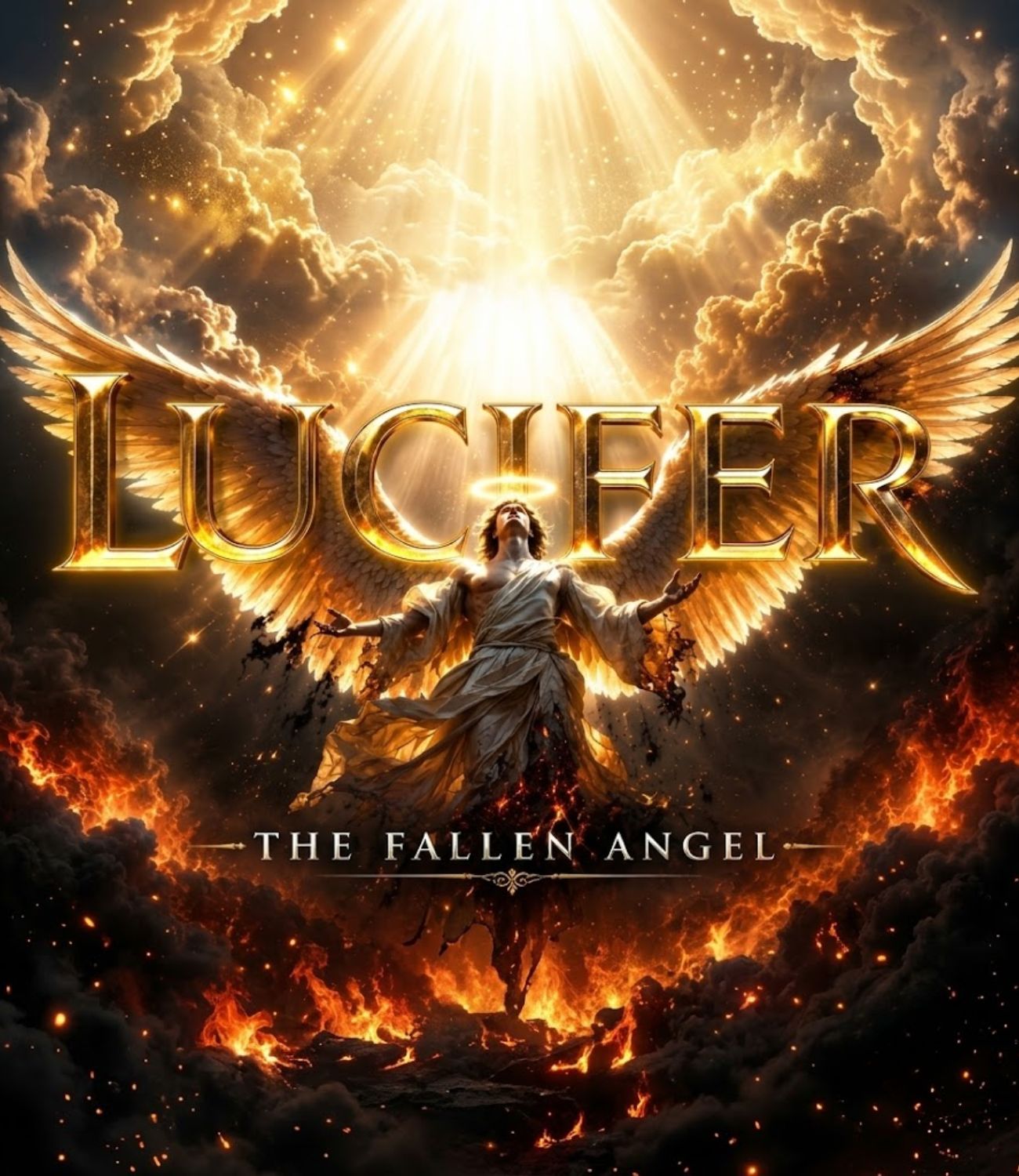
Before he became Satan, he was heaven’s brightest creation. Before demons, before temptation, before the fall of mankind, there was Lucifer.
Millions of angels surrounded the throne of the Almighty. Seraphim with burning wings, cherubim crying out, “Holy, holy, holy is the Lord Almighty.” (Isaiah 6:3). The heavens echoed with worship, with obedience, with glory.
And among all the beings in heaven, one stood above the rest. Not because he was God, but because he was beautiful beyond imagination. The Bible calls him the morning star, the seal of perfection, full of wisdom, perfect in beauty. His name meant lightbringer: Lucifer.
He was not created evil. He was created glorious. Ezekiel describes him adorned with precious stones. When he moved, the glory of heaven reflected through him like living fire. He stood near the throne itself. He led worship in the courts of heaven. And for ages untold, everything was perfect—until something unthinkable happened.
Not on earth, not among sinful men, but in heaven itself, Lucifer stopped looking at God and began looking at himself. The light that once reflected the Creator’s glory became consumed with its own beauty. And in that moment, pride was born.
What followed was the greatest rebellion in all of creation: a war in heaven. Angels divided against angels, glory collapsing into darkness, and the most beautiful being ever created would become the enemy of God himself.
“How you are fallen from heaven, O Lucifer, son of the morning.”
This is the story of the fall of Lucifer.
Before rebellion entered heaven, there was perfect peace. The throne of God stood at the center of all creation, surrounded by unapproachable light. The prophet Daniel described it this way: “His throne was flaming with fire, and its wheels were all ablaze.” Lightning flowed from his presence. Power shook the heavens, and countless angels surrounded him endlessly.
The courts of heaven overflowed with worship. Day and night, the angels cried, “Holy, holy, holy is the Lord God Almighty.” (Revelation 4:8). Every creature in heaven knew one truth: God alone was worthy of glory.
And among all the angels of heaven, one stood above the rest: Lucifer. Ezekiel gives us a mysterious glimpse into who he once was: “You were the seal of perfection, full of wisdom and perfect in beauty.” (Ezekiel 28:12).
Lucifer was not ordinary. He was the anointed guardian cherub, a being created with extraordinary beauty, wisdom, and authority. Every precious stone adorned him: carnelian, chrysolite, emerald, topaz, onyx. The light of heaven reflected through him like living fire. He was a masterpiece of creation. When he moved through the courts of heaven, glory seemed to move with him. When he lifted his voice in worship, the heavens trembled with praise. He stood close to the throne of God himself, closer than any other created being.
And scripture says something astonishing about him: “You were blameless in your ways from the day you were created.” (Ezekiel 28:15).
Lucifer was not born corrupted. He was not created wicked. He was created perfect. For ages beyond human understanding, he served faithfully in the presence of God. He bowed before the throne. He reflected heaven’s glory back to its Creator. He led worship among the heavenly host. Everything in heaven moved in harmony, until something began to change inside him. A thought, a desire, a poison so dangerous it could corrupt even the beauty of heaven itself: pride.
Lucifer had spent ages looking upon the glory of God, but one day, he stopped looking at the Creator and started looking at himself. At first, the change was invisible. No angel heard a rebellion. No trumpet sounded in heaven. The corruption began silently inside the heart of Lucifer.
For ages, he had reflected the glory of God like a mirror reflecting sunlight, but slowly, the mirror began admiring its own reflection. Lucifer looked upon himself. He saw the brilliance woven into his being, the emeralds across his chest, the gold that shimmered through his form, the radiance that surrounded him wherever he moved. And somewhere deep within him, a terrible thought was born: What if this glory belonged to him?
Ezekiel records the exact moment pride poisoned his heart: “Your heart became proud on account of your beauty, and you corrupted your wisdom because of your splendor.” (Ezekiel 28:17).
Lucifer forgot something critical. His beauty was never his own. It was a gift. The light shining through him came from God, and the more Lucifer admired himself, the less satisfied he became with simply serving heaven.
He began looking at the angels differently. He saw them bow before the throne. He heard them sing praises to the Almighty. He watched all of heaven revolve around God, and jealousy ignited inside him like fire. Why should worship belong to God alone? Why should he lead worship instead of receiving it? He was beautiful, wise, powerful. He no longer wanted to reflect the light. He wanted to become the light.
The prophet Isaiah reveals the rebellion growing inside Lucifer’s heart: “You said in your heart, ‘I will ascend to the heavens; I will raise my throne above the stars of God.'” (Isaiah 14:13). The stars of God referred to the angels. Lucifer no longer wanted to stand among them. He wanted dominion over them.
“I will sit enthroned on the mount of assembly.” (Isaiah 14:13). He wanted the center of worship, the center of glory, the center of heaven itself.
“I will ascend above the tops of the clouds.” (Isaiah 14:14).
And then came the words that sealed his doom forever, the ultimate rebellion: “I will make myself like the Most High.” (Isaiah 14:14).
Not a servant, not a worship leader, not an angel—a god. Lucifer was no longer satisfied standing near the throne. He wanted the throne itself. And the moment pride fully consumed him, heaven would never be the same again.
But rebellion requires followers. Lucifer could not challenge the throne of heaven alone, and so the deception began. Not with swords, not with violence, but with whispers.
Lucifer moved among the heavenly host, speaking quietly in the courts of heaven. The same voice that once led worship now spread corruption. He planted dangerous thoughts into the minds of angels: questions, doubts, discontent. Why should absolute authority belong to God alone? Why should they serve forever? Why should Lucifer, the greatest among them, remain beneath the throne?
The poison that had corrupted Lucifer’s heart began spreading through heaven itself. He spoke of freedom, of greatness, of rising higher. And many angels listened, because evil rarely begins as obvious darkness. It often begins disguised as wisdom and ambition.
The book of Revelation describes the rebellion symbolically: “And his tail swept a third of the stars out of the sky.” (Revelation 12:4). A third of heaven followed Lucifer. Angels who once sang together in perfect harmony now stood divided. Some remained faithful to the Creator. Others pledged loyalty to Lucifer.
The courts of heaven filled with tension. The whispers became open defiance. The rebellion was no longer hidden. The lines had been drawn.
Revelation declares: “And war broke out in heaven: Michael and his angels fought against the dragon.” (Revelation 12:7).
Lucifer unleashed his power against the kingdom of God. The angel once covered in beauty now burned with pride and rage. The heavens shook with conflict. Light collided against rebellion. Creation witnessed something unimaginable: war in heaven.
But Lucifer had made one fatal mistake. He believed created power could overcome the Creator. And no rebellion against God could ever succeed. The war ended with judgment. Lucifer would not rise above the throne. He would fall beneath it.
The rebellion ended in catastrophe. Lucifer and the angels who followed him could not overcome the power of God. Revelation says: “But he was not strong enough, and they lost their place in heaven.” (Revelation 12:8).
Then came the judgment—the moment that changed the universe forever: “So I drove you in disgrace from the mount of God, and I expelled you, guardian cherub.” (Ezekiel 28:16).
Lucifer was cast out of heaven. The highest angel became the greatest failure in creation. Isaiah describes the shock of heaven itself: “How you are fallen from heaven, O Lucifer, son of the morning!” (Isaiah 14:12). The one once called lightbringer now fell through darkness. The one once clothed in beauty now became corrupted by pride.
Jesus himself later declared: “I saw Satan fall like lightning from heaven.” (Luke 10:18).
Lucifer plummeted from the glory of God like a blazing star collapsing from the sky. His beauty twisted, his wisdom corrupted, his holiness destroyed. The light that once reflected heaven became darkness, and the angels who followed him fell with him. No songs remained, no worship, no glory. Only rebellion, hatred, and rage.
Revelation says: “The great dragon was hurled down—that ancient serpent called the devil, or Satan, who leads the whole world astray.” (Revelation 12:9).
Lucifer was no longer the morning star, no longer the guardian cherub, no longer heaven’s worship leader. Now he had a new name: Satan, the adversary, the accuser, the deceiver. And though he had lost heaven, he had not lost his pride. His hatred burned stronger than ever. He knew he could never defeat God, but there was something else he could attack—something deeply loved by the Creator: humanity, the beings made in the image of God himself.
And so the rebellion that began in heaven would soon spread to earth.
The tragedy of Lucifer’s fall was about to become the tragedy of mankind. The earth God created was beautiful, peaceful, untouched by suffering. The Garden of Eden overflowed with life, rivers, fruit, and perfect harmony between mankind and their Creator. Adam and Eve walked with God without fear. There was no death, no shame, no pain.
But heaven’s rebellion had not ended. It had merely changed locations. Somewhere beyond the garden, a fallen being watched. The one who had once stood near the throne of God now crept through creation in darkness. And he carried the same poison that had destroyed him in heaven: pride, jealousy, rebellion. Satan could no longer strike the Creator directly, so he turned toward the Creator’s beloved creation: humanity.
Genesis describes the moment evil entered the garden: “Now the serpent was more crafty than any of the wild animals the Lord God had made.” (Genesis 3:1).
Satan approached Eve not with violence, but with deception—the same method he had used in heaven. Whispers, doubt, questions: “Did God really say…?” (Genesis 3:1).
The strategy had not changed. In heaven, Lucifer convinced angels to question God’s authority. Now he tempted humanity to do the same. And then came the lie that mirrored his own rebellion perfectly: “You will not certainly die.” (Genesis 3:4). “Your eyes will be opened, and you will be like God.” (Genesis 3:5).
“Like God.” Those were the exact desires that had corrupted Lucifer himself. The desire to rise higher. The desire to take God’s place. The poison that destroyed heaven now entered earth.
Adam and Eve believed the lie, and sin entered humanity for the very first time. Shame replaced innocence. Fear replaced peace. Death entered creation. The rebellion that began beside God’s throne had now spread to mankind. And the enemy who once fell from heaven became the deceiver of the world.
But even in humanity’s darkest moment, God spoke a promise, a prophecy, a warning to Satan himself. Speaking to the serpent, God declared: “He will crush your head, and you will strike his heel.” (Genesis 3:15).
From that moment forward, the story was no longer only about the fall of Lucifer. It became the story of humanity’s redemption, hidden within the fall of Lucifer.
If this story challenged you or reminded you of the terrifying majesty of God’s holiness, I would love to hear your thoughts in the comments below. And for more cinematic biblical stories that reveal the power and truth of scripture, subscribe to Stories of the Olives.