Exploring the Hidden Biblical Locations That Still Exist!
There is a place mentioned in the Bible that today lies hidden in the depths of the sea. It spent 2,000 years underwater, hidden in plain sight. The Bible described it precisely and science has found it. And it is irrefutable proof that what we read in the Bible actually happened.
But this is just the tip of the iceberg. Get ready because we are traveling back in time over 3,000 years of history. We are going to explore the 13 exact places mentioned in the Bible that still exist. Some are buried, others submerged, still others hidden in plain sight. But they all answer the big question: Is what we read in the Bible true?
If you are passionate about discovering the truth, hit that like button and stick around until the end because we are about to reveal something no one has ever told you before. Biblical locations that remain hidden to this day, waiting to be discovered.
1. Qumran (Kumran)
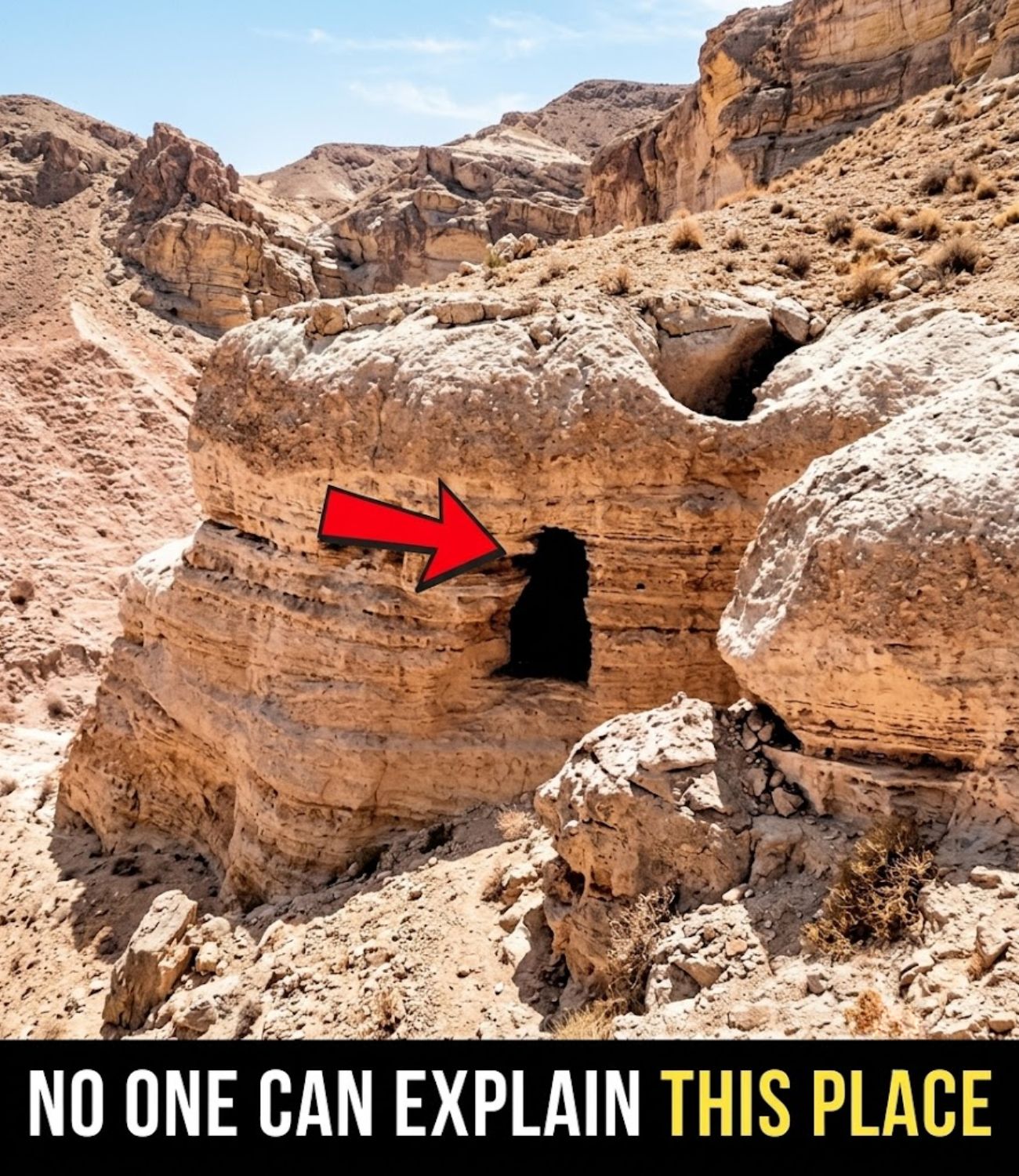
Just 1 kilometer from the Dead Sea in the Judeian Desert lies a place called Kumran. And here, one of the most important discoveries in history took place. For centuries, critics claimed the Bible was a late text, manipulated, and highly unreliable. The oldest copies of the Bible ever found dated back to around 1,000 AD. That left a gap of more than a thousand years, during which skeptics claimed the texts had been copied and altered so many times that what we read today would bear no resemblance to what was originally written.
Then in 1947, a discovery changed everything. The story sounds like something out of a legend. A young Beduan shepherd was searching for a lost goat among the limestone cliffs. To check if the animal was hiding in one of the crevices, he threw a stone into a cave. Suddenly, he heard a sharp metallic sound. It was the sound of pottery breaking. What he found inside left the world speechless. When he went in, he found several sealed clay jars. Inside were parchment scrolls wrapped in linen. They had been sitting there untouched for more than 2,000 years.
This shepherd had just discovered the Dead Sea Scrolls: copies of every book of the Old Testament except one, the Book of Esther. And they dated from the 3rd century BC up to AD 68—manuscripts written before Jesus and during his own lifetime. And now came the moment of truth. When experts compared these manuscripts to modern Hebrew Bibles, they discovered something remarkable. They were practically identical. The same words, the same phrases, the same text.
Take the great Isaiah scroll for example. A scroll 7 m long (about 23 ft), and 1,000 years older than any copy of Isaiah we’d had before. And when you compare it with the book of Isaiah in the Bible you have at home today, it matches 95% essentially identical. The remaining 5% are only spelling or scribal variations that don’t change the meaning. The news was devastating for the critics. The Bible hadn’t been rewritten. The Bible we read today is exactly the same one people read in the time of Jesus.
But Kumran held more surprises. When archaeologists explored the cliffs, they found the ruins of a settlement once inhabited by a mysterious community, the Essenes. The Essenes were a group of Jews who withdrew into the desert in pursuit of absolute purity. They were obsessed with ritual purity and with copying the scriptures exactly. They lived by strict rules. They handcopied the sacred texts and awaited the imminent arrival of God’s judgment.
Then in AD 68, as the Roman army closed in to destroy Jerusalem, the Essenes chose to hide their life’s work. In a rush, they packed the scrolls into clay jars and sealed the caves. Amazingly, the Dead Sea’s arid climate, its salt, and utter lack of moisture, worked like a time capsule, preserving them perfectly for more than 2,000 years.
After that first cave was found, explorers combed hundreds more in the area. In 11 of them, they recovered a total of 930 scrolls and over 50,000 fragments. But amid them all, one stood apart: A scroll that defied archaeological logic, the so-called copper scroll. Discovered in 1952 in cave 3, it turned out to be a sheet of nearly pure copper. It was a baffling find because copper wasn’t used for writing. It was extremely expensive and notoriously hard to engrave.
Time had corroded it so badly that unrolling it would have made it disintegrate. So, it was sent to Manchester where, using a saw of surgical precision, they cut it into 23 strips to read what was inside. And when they fit the pieces together, they discovered something that stunned the world. It wasn’t a biblical text. It was the greatest treasure map in human history.
The copper scroll was in fact a list of 64 locations where 26 tons of gold and 65 tons of silver were hidden, along with incense and priestly garments. Such immense wealth, scholars agree, couldn’t have belonged to the small community that lived at Kumran. Everything points to this being the actual inventory of the treasures of Jerusalem’s second temple, hurriedly hidden before the Roman legions arrived. Many believe that faced with the unstoppable advance of the Roman army, the temple’s treasurers removed Jerusalem’s gold reserves and buried them in the desert, and the copper scroll would be the official record so that after the war, the people could reclaim their heritage. That’s why the text precisely describes all 64 locations with directions to places like tunnels, cisterns, and deep wells.
So, the question is, were the temple treasures still hidden in those locations? Many have tried to follow the map, but no one has found it yet. The horde remains one of archaeology’s greatest unsolved mysteries. There are three problems:
The landscape has changed. References like the fourth well or the entrance to the white cave were clear 2,000 years ago. But today, after centuries of earthquakes and erosion, those landmarks have vanished.
The instructions are believed to conceal hidden codes. Many argue the text uses a secret system of measurements or code names known only to a select few.
There’s also another possibility: someone got there first. The Romans themselves may have, through torture, forced out the locations of some of these caches, or the Jews may have recovered parts of the treasure in the centuries that followed.
Today, the copper scroll sits in the Jordan Museum in Amman. Researchers are still studying this road map to a fortune that if found would be the greatest archaeological discovery of all time. They’re also investigating other caves in the area. As recently as 2017, cave 12 was discovered. The discovery stirred great excitement, but all it held were broken jars. No scrolls inside, proof it had been looted long ago. Mysteries remain, yet Kumran’s true value was bringing the truth to light. It is a historical record safeguarded by people who gave their lives so not a single letter would be lost. So that today we can say with certainty that what is written in the Bible is what truly happened.
2. The Dead Sea, Sodom, and Gomorrah
Just a kilometer from these caves, we find the Dead Sea. It’s the lowest place on the planet’s surface, 430 m below sea level. A sea where it’s almost impossible to sink. Its salt concentration is nearly 10 times that of the ocean. Just lie back and the water holds you up as if the laws of physics had been rewritten. Here, water evaporates at a staggering rate. But the salt and minerals do not. They remain, concentrating over millennia.
Today, we call it the Dead Sea because it’s a barren wasteland. No fish, no algae, no life. But the Bible tells us that 4,000 years ago, it was the very opposite. It was the richest agricultural hub in the region. Back then, the area was called the Kar, the Jordan Valley Basin, a vast tropical oasis. This was the paradise Lot saw when he parted from Abraham, describing it as like the garden of God. There was lush vegetation and abundant fresh water that sustained five wealthy cities: Admma, Zeboim, Bella, Sodom, and Gomorrah.
Yes, this is where, according to Genesis, Sodom and Gomorrah stood. Cities so corrupt that violence, injustice, and the humiliation of the weak had become normal. The depravity was so great that God chose to intervene. The Bible says fire and sulfur fell from the sky. The cities were wiped out within moments, and the entire plane was left in desolation. For centuries, this story was dismissed as a baseless tale, an exaggerated warning, until science set out to investigate whether it truly happened.
In 2021, an international team turned to an archaeological site called Tall el-Hammam, just a few miles northeast of the Dead Sea. And when they began to dig, what they found left them speechless. In the ruins of this city, they found a layer of ash several meters thick and something even more disturbing: Bricks that had melted and pottery turned to glass. To turn clay into glass, you need temperatures above 2,000°C, hotter than a typical volcanic eruption.
A scientific study documented a sudden, extreme, and violent destruction about 3,600 years ago. The scientists concluded that a meteor or cosmic fireball exploded over the city with a force a thousand times greater than the Hiroshima bomb, vaporizing everything in its path within seconds. And that fits perfectly with the account in Genesis:
“Then the Lord rained down sulfur and fire on Sodom and Gomorrah from the heavens.”
But there’s more. The research uncovered an astonishing detail. The heat was so intense it evaporated water from the Dead Sea and sent a rain of boiling salt across the entire plain. This also matches the biblical story of Lot’s wife who became a pillar of salt when she stopped and looked back. Yes, there is now scientific evidence that it was real. What’s more, this scientific study rests on hundreds of data points and tests indicating that this truly is Sodom and Gomorrah.
The Bible says the valley was full of tar pits, and it has been shown that the Dead Sea region sits on an active fault with enormous underground deposits of methane gas and sulfur. A strike from the sky or an earthquake could have triggered these deposits to explode, unleashing a devastating wave of heat powerful enough to level buildings, vaporize water, and incinerate an entire city in seconds. They’ve also found formations of white ash that still hold the shapes of walls and ziggurats, but that crumble the moment you touch them.
And there’s an even more chilling detail. Walk along the nearby cliffs and you can find balls of pure sulfur embedded in the rock. Something that occurs naturally nowhere else on Earth. Pry them from the wall and hold a flame to them and they ignite instantly, burning with an intense blue fire and leaving a pungent smell. Many researchers consider them the physical residue of the rain of fire and sulfur described in Genesis.
The Bible says the region was left desolate. Now archaeology has confirmed that no one returned to live there for generations. The soil became so saturated with salt that the land was uninhabitable for centuries. Agriculture vanished and neighboring cities were abandoned. The area died literally. Today we look upon the scene of Sodom and Gomorrah’s destruction. One of the Bible’s most terrifying judgments etched into the very geography of the earth.
3. The Jordan River
But if you look closely, the water that feeds the Dead Sea comes from a place that represents the very opposite. Go a few miles farther and you reach where the water gives life again, the Jordan River. It’s the most famous river in the world. Yet, when you first see it, it’s nothing like you probably imagined. It’s a narrow, winding stream, often a muddy brown.
The Bible doesn’t present it as just any river. It presents it as a historic frontier. And archaeology has confirmed that it truly was. After 40 years of wandering in the wilderness, Israel finally reached the edge of the promised land, right at the banks of the Jordan. But the book of Joshua tells us it was harvest time and the Jordan was raging and overflowing. They couldn’t cross. For years, this was heavily questioned until modern hydrological studies revealed that before the modern dams, the Jordan overflowed every spring, flooding the entire plane and becoming a natural barrier that made crossing impossible. The Bible wasn’t exaggerating. It was describing reality.
But there’s more. In the book of Joshua, we read how the people of Israel crossed the river. The priests carried the ark of the covenant, and suddenly the water coming from upstream stopped flowing and piled up a great distance away at a town called Adam near Zarathan. And the water that was downstream emptied into the Dead Sea until the riverbed was dry. For many, this was yet another myth that couldn’t stand up to reality. Until modern geological records revealed something surprising. The Jordan Valley is an active seismic zone, and on several occasions, earthquakes have triggered massive clay landslides from the cliffs that completely damned the river’s course. This has been documented at least six times in history. Most recently, in 1927, water was blocked upstream, and for 21 hours, the riverbed lay dry exactly as the Bible recounts. The impossible proved true.
But the most decisive moment on this riverbank still lacked confirmation: the baptism of Jesus. For a long time, people argued about the exact spot. There was, however, a clue. The so-called Madaba map, a mosaic set into the floor of a church in Jordan that points to the very place where Jesus was baptized. In the 1990s, after the Peace Accords, archaeologists were finally able to dig at that site, and they found far more than they ever expected. They uncovered remains of five Byzantine churches right on the water. One of them built over a cave that early Christians revered as the place where John the Baptist lived.
And at last they found the clincher on the riverbank: a marble structure with steps leading down into the river. It was a massive cross-shaped baptismal pool. And beside it, they found many more carved into the rock designed for collective immersion rituals. This confirmed something remarkable. The earliest Christians knew exactly where it had happened and marked that spot as the precise place where Jesus was baptized by John the Baptist. And in this very area, remains of Roman roads, checkpoints, and administrative structures have also been discovered, confirming something crucial. The Jordan was a real political frontier. Crossing it meant entering another jurisdiction. Which means that when Jesus was baptized here, he didn’t just begin his public ministry. He was crossing a border.
Today, the Jordan endures a silent tragedy. In biblical times, it was a mighty river, dangerous to cross. But now, with so much of its water diverted for agriculture and human consumption, its flow has dropped by 95%. In some stretches, it’s little more than a trickle, struggling to reach the Dead Sea. And if the Jordan stops flowing, the Dead Sea will disappear. Their fates are bound together.
4. Gilgal
After crossing the Jordan, the Bible reveals the exact place where the people of Israel settled, a desert plane called Gilgal, just 5 miles from the river. And here, something incredible has been found. This place holds one of the most fascinating archaeological secrets of recent years. The Bible recounts that after crossing the Jordan River, Israel paused and set up its first camp in the promised land. Its name was Gilgal. Here, Joshua raised 12 stones taken from the Jordan’s dry riverbed, one for each tribe of Israel.
For decades, archaeologists searched for the site, but found nothing. They assumed it would be an ordinary city with walls and towers, until an archaeologist named Adam Zertal decided to look for clues from the sky, and he discovered something no one expected. He found five massive stone structures known as Galgallum, which viewed from above, have the exact shape of giant human footprints. Some are as large as several soccer fields.
But why a foot? The Bible gives us the clue. In the book of Joshua, God repeats the same promise to his people again and again:
“I have given you every place where the sole of your foot treads just as I promised Moses.”
Back then, the foot was a legal symbol of ownership. To tread on land meant to possess it. Now, we understand why God tells that to Joshua. The promise God had made to his people so many times wasn’t poetry. It was a literal command. And that’s why the Israelites built these foot-shaped enclosures. They were signing their deed to the land. They were leaving a physical footprint to declare this ground already has an owner.
But these sites weren’t cities to live in. They were open air temples. We know this from a fascinating detail. Each footprint has a paved corridor that runs all the way around the edge. Archaeologists believe the people walked in procession along that rim, literally treading the outline of the footprint in religious ceremonies. In fact, the Hebrew word for feast, hag, means to move in a circle. Every time they celebrated, they walked over these stone sandals, remembering they were there because God had allowed them to set foot in their new homeland. Today, these remarkable structures are the most compelling evidence that the conquest of Canaan was a real historical event still visible from the air.
5. Jericho
Yet, from the camp at Gilgal, the Israelites only had to lift their eyes to see their worst nightmare. Just a few miles away, the walls of Jericho loomed. Welcome to the city that shouldn’t exist, yet has survived everything. It’s the oldest city in the world and also the lowest on Earth, lying about 820 ft (250 m) below sea level.
Excavations at Tell es-Sultan have uncovered more than 20 layers of occupation, some over 10,000 years old, which means that when Israel arrived, Jericho had already watched entire civilizations rise and fall, and it was ready to resist. According to the Bible, Jericho was an impregnable fortress, protected by double walls and fully fortified. And here is one of the Bible’s most debated episodes. According to the book of Joshua, Israel didn’t attack. They marched.
For 6 days, the Israelites simply circled the city in silence, carrying the ark of the covenant. And on the seventh day, after seven circuits and the blast of the shofar, the people let out a battle cry. And the impossible happened. The walls came crashing down. And not only that, according to the Bible, the walls fell in on themselves, forming a perfect ramp of debris for an assault. The army didn’t have to climb. Each man went straight ahead to what lay before him and took the city. There were no siege engines, no ladders, no battering rams at the gates.
For decades, archaeologists said it was all a myth. Even the famed archaeologist Kathleen Kenyon excavated the site in the 1950s and claimed there weren’t even walls in Joshua’s time. But years later, new digs revealed details that left the experts speechless. They discovered that at the outer base of the stone wall, a mound of red mud bricks had piled up, fallen from the upper wall. And sure enough, the bricks had fallen outward, creating a ramp from the ground to the top of the wall, just as the Bible relates word for word. The only explanation the archaeologists suggested was that an earthquake could have caused this specific outward collapse.
But there’s more. The Bible says that after the walls came down, the Israelites burned the city with fire and everything in it. Beneath the rubble, archaeologists uncovered a layer of ash and charcoal nearly a meter thick. The blaze was so intense that the mudbrick walls were hardened as if they’d been fired in a kiln. They even found dozens of jars filled with roasted grain. That proves two things: The siege was very short, about 7 days, just as the Bible says. And the invaders didn’t loot the food, obeying God’s command to take nothing from the city.
Remember how archaeologists initially said there were no walls in Joshua’s era? It’s now been confirmed that Jericho had a double wall system, a solid lower wall and an upper wall separated by an earthen rampart. But there was one loose end in Joshua’s account. The Bible relates that between the walls lived Rahab, a woman of ill-repute who helped two Israelite spies escape through her window. In return for her help, Rahab was spared when the city was taken. She marked her window by hanging a scarlet cord. Yes, what archaeologists thought impossible turned out not to be. In the northern sector of the site, they found houses built directly against the wall with windows opening to the outside. And the most striking thing is that in that very spot, a section of the lower wall with houses built into it didn’t fall. For reasons archaeologists still can’t explain, it remained intact. Yes, all of this is real and documented. The precision of the biblical evidence is hard to believe.
Today, Jericho is a vibrant oasis in the middle of the Judeian desert. You can ride a modern cable car that carries you from the ruins of the ancient city up to the Mount of Temptation where Jesus is believed to have fasted for 40 days. From above, the contrast is clear. The modern city full of palm trees and tourists, and at its feet the mound of earth where 3,000 years ago the conquest of the promised land began.
6. Jerusalem
Here the road goes only one way up. From the lowest point on earth, we climb through the Judeian desert to reach the heights where history becomes eternal. We’re approaching the heart, the throne of the nation, and the stage for the greatest biblical mysteries, the city of Jerusalem. Its name means city of peace. Yet, it may be humanity’s greatest irony. Nowhere on earth has more blood been shed in pursuit of that very thing, peace. Every stone in this city has been fought over, conquered more than 40 times, wiped from the map completely on two occasions, and still it has always risen again.
Its name appears more than 800 times in the Bible, and the first mention goes back over 3,000 years when the eyes of a young, newly crowned king settled on a small hill. Something unthinkable had just happened. After years of civil war, all the tribes of Israel had acknowledged David as their king. He was no longer just the ruler of Judah. He now reigned over the entire nation of Israel. But there was a serious problem. Israel had land, an army, and a king, but no capital. If David chose a city from any one tribe, the political balance would tip. The nation could fracture again. He needed a neutral city, ownerless, one no tribe could claim.
Then he remembered a small fortress Israel had never managed to conquer when they entered Canaan, Jebus. Though Joshua defeated its king in the legendary battle when the sun stood still, he never captured the city. Jebus was a tiny city, less than six hectares, about 15 acres, perched on a very steep hill. Three of its sides were guarded by deep valleys, and the only viable access was a narrow, easily defended slope. Taking it seemed an impossible mission. The Jebusites thought they were untouchable. They mocked David, saying that even the blind and the lame could defend it.
But David remembered something he’d learned as a shepherd: The importance of water. He saw what others didn’t. The only permanent water source for miles, the Gihon Spring, which incidentally still flows to this day. So he asked himself, “How are the Jebusites getting their water?” Suddenly someone gave him the crucial clue he needed. They had a secret access point, a vertical water shaft connected to the spring that supplied the small city. If a small band of warriors could climb up through that tunnel, they could take the city before dawn.
The operation was swift and lethal. By sunrise, Jebus was gone. The city of David was born, and he called it Jerusalem. David understood that the new capital of Israel would not be merely a political center. It had to become the spiritual heart of the whole nation. Then he made a decision that would change history: to bring the ark of the covenant, the holiest object in Israel, the tangible sign of God’s presence. And he dreamed of building him a permanent house on Mount Moriah, the very place where Abraham was willing to sacrifice his son Isaac. Yet that honor would not be his. God told him he would not build it. The temple would be raised by his son Solomon.
Instead of growing frustrated, David devoted the last years of his life to preparing for what he would never see finished. He stockpiled tons of gold and silver, organized priests and musicians, and even drafted plans with the finest architects. But what Solomon built exceeded every expectation. The Bible says the temple took 7 years to complete, with more than 180,000 men at work, and all of it in absolute silence. The stones were shaped at the quarries far from the mount, so that no clatter of tools would be heard on the holy ground.
At last, the colossal temple rose against the city’s skyline. For nearly four centuries, it stood at the center of the known world, the place where God’s presence touched the earth. There was no other place where sacrifices to God were permitted. So three times a year, the entire nation made the pilgrimage there. The temple was the axis of their national identity.
Then in 586 BC, the horizon went black. The army of Nebuchadnezzar II encircled the city. The Babylonian siege was slow and merciless. For months, they choked the city until hunger curdled into desperation. The walls that had shielded Jerusalem for generations finally gave way. And when the Babylonians surged in, they left nothing standing. Solomon’s temple was looted, set ablaze, and reduced to ash. And listen closely. The Bible carefully lists the treasures they carried off: gold, vessels, columns, altars. But notice what’s missing from that list. The most important thing of all, the Ark of the Covenant is nowhere to be found. If the Ark wasn’t stolen and it wasn’t destroyed, then where is the Ark of the Covenant? Look closely, and it’s as if the list was crafted to pose this very riddle. There are clues to where it may lie hidden, but we’ll get to them at the end when we reach the biblical locations that still remain concealed.
Jerusalem was completely destroyed, wiped off the map. Yet this city has a stubborn way of refusing to vanish. Decades later, the exiles came home and built a new temple. It wasn’t as majestic, but it gave the people their hope back. And centuries later, Herod the Great expanded it until it became one of the most breathtaking works of architecture in the ancient world. A gigantic complex covered in pure gold. It was the pride of the nation. This was the temple Jesus of Nazareth entered. And there he delivered one of the most unsettling warnings about Jerusalem:
“Do you see all this? Truly, I tell you, not one stone here will be left on another. Everyone will be thrown down.”
At the time, it must have sounded absurd. Some of the stones were over 40 ft long and weighed hundreds of tons. But barely 40 years later, after a Jewish revolt, the Roman legions encircled Jerusalem, and the siege was brutal. The temple went up in flames and the heat was so intense that the gold that covered it melted and seeped into the cracks between the stones. To retrieve it, the soldiers took the building apart stone by stone, fulfilling the prophecy to the letter. From that day on, no other temple was ever built.
It looked like the final end, but something incredible remained standing: The Western Wall, today known as the Wailing Wall. Many believe it was one of Herod’s temple walls, but it isn’t. The truth is far more striking. The wall was never part of the temple. It’s a section of the colossal retaining structure Herod built to support the platform on which the temple stood. In other words, the wailing wall isn’t part of the temple. It’s part of the foundations that held the temple up.
If you travel there, you’ll see something extraordinary. People of all ages draw near, lay a hand on the stone, and whisper their prayers. Many even tuck slips of paper with prayers into the cracks. No matter what time you go, the wall is never empty. There’s always someone praying. That’s part of what makes it unique. For nearly 2,000 years, it has been a place of unbroken prayer. But what’s truly astonishing is that what you see in the plaza is only the tip of the iceberg. 85% of the wall lies hidden underground. The visible section is about 57 m long, but in reality, it stretches nearly half a kilometer beneath the old city.
Jerusalem is quite literally a city built on layers of history. And beneath the surface, there’s an underground world few can imagine. Today, you can walk through secret tunnels under Jerusalem and emerge right in front of the temple’s foundations. Archaeologists have even uncovered a tunnel secretly hewed straight into the rock, engineered so residents could draw water outside the walls without being detected by the enemy.
Most striking of all, today the Bible is guiding hundreds of active archaeological digs packed into less than a square kilometer of the old city. You might not know that in 2004, a mishap changed everything. Workers repairing a water main cracked open the ground and there it was. Stone steps from the first century, the time of Jesus. They had uncovered the pool of Siloam. The very spot where, according to the Gospel of John, Jesus healed a blind man and told him:
“Go wash in the pool of Siloam.”
This isn’t a reconstruction. It’s the original stone pavement. Years later, a road that connected that pool to the temple was discovered as well. And the definitive forensic evidence was found beneath the paving stones: coins minted under the authority of Pontius Pilate along with inscriptions, ossuaries, and seals. The irony is astonishing. The Roman destruction that buried the city also froze time and preserved first century layers intact so that we, 2,000 years later, could confirm the story was real.
7. Bethlehem
And just 5 miles from Jerusalem lies the place where history split in two: Bethlehem. Its Hebrew name Bet Lehem means house of bread, and it was known as the city of David because Israel’s great king was born there. Ancient Bethlehem is built atop a chain of natural caves used for millennia as shelters and stables, and in one of them prophecies foretold centuries earlier were fulfilled. The Messiah was born in that small village and was a descendant of David.
If you travel there today, you’ll come upon the Basilica of the Nativity, built directly above the cave where Jesus was born. But how can we be sure it’s the very cave? Local people had always pointed to this precise spot. But it was a pagan emperor who, without realizing it, marked it forever. In AD 135, the Roman Emperor Hadrian built a pagan temple to Adonis right over the cave to seal off and conceal the site.
But when the Roman Empire embraced Christianity, Emperor Constantine’s mother, St. Helena, came to the Holy Land. To find the place of Jesus’ birth, she only had to ask for the temple of Adonis. Helena ordered it demolished and beneath it found the cave intact. There in AD 330, she built a magnificent basilica. Although a fire severely damaged it in the 6th century, Emperor Justinian rebuilt it on the same foundations, keeping the original grotto as the heart of the sanctuary. Today it is one of the oldest continually operating churches on the planet.
On the site of the temple, St. Helena built a magnificent basilica in AD 330. But you should know that the church we see today isn’t exactly the one Helena built. To enter, you have to pass through the door of humility. It’s a stone entryway so low and narrow it forces everyone from leaders and kings to ordinary tourists to bow deeply to get inside. This is the temple’s astonishing first architectural message. No one approaches the place where God became man without first becoming small.
Deep within the basilica beneath the high altar, a stairway descends to the grotto of the nativity. It’s a narrow passage to the original cave where the Messiah was born. There, set into the marble floor, a 14-pointed silver star marks the exact spot where the manger stood. It’s the geographic epicenter of the Christian faith. The metal is smooth, worn by the touch of millions of hands that have passed there over the centuries.
Still, if you want to visit this place, there’s something you should know. The peace inside that cave stands in stark contrast to what lies outside. To get into Bethlehem today, you have to cross a 26-ft tall concrete barrier twice the height of the old Berlin Wall. But what exactly is this wall? This U-shaped barrier physically separates Israel from the West Bank. Israel built it after the second intifada, a wave of suicide attacks that left hundreds dead. But the wall doesn’t follow the official international border, and it has turned Bethlehem into a kind of cage, isolating it from Jerusalem and from any economic opportunity.
The impact has been devastating. Because of the lack of economic opportunity and the isolation the wall causes, thousands of Christian families have immigrated. Bethlehem is losing its people. The pace at which its Christian population is leaving is alarming. In 1947, Christians made up 85% of Bethlehem’s population. Today, they barely top 10%. The community that has guarded these holy places for two millennia is disappearing. The cradle of Christianity is running out of Christians. And this isn’t happening only in Bethlehem. Remember this because it will be important later.
8. Nazareth
About 93 mi north of Bethlehem, tucked among the gentle hills of Galilee, lies the other city central to Jesus’s life, Nazareth. 2,000 years ago, last names weren’t a thing the way they are now. Your identity came from your father or your place of origin. And the most famous man in history was known by his hometown, Jesus of Nazareth. What you may not know is that “of Nazareth” wasn’t a compliment. It was seen as a weakness. Nazareth was just a handful of stone and mud houses clinging to a hillside in Galilee, so insignificant that historians spent centuries trying to find it on a map.
Here, the angel Gabriel announced to the young Mary that she would bear the Messiah. Today, on that very spot stands the largest Christian church in the Middle East, the Basilica of the Annunciation. Yet, the real treasure isn’t its dome, but what lies beneath the floor. Excavations revealed that beneath the modern church lie crusader remains. Beneath the crusaders, Byzantine walls, and deeper still, a first century cave home. This is the grotto known as the cave of the annunciation where Mary is believed to have heard the angel’s words.
But Nazareth holds many more biblical traces because this is the village where Jesus grew up. The holy family chose this place because no one would think to look for the Messiah here. Yet Nazareth kept a secret. Just four miles away ran the Via Maris, the international highway that linked empires. Jesus didn’t grow up cut off from the world. He grew up watching the world go by, hidden in plain sight. God chose to hide his son where no one would think to look, yet where everyone would see him without realizing it. Even from the hills of his village, young Jesus could see the Valley of Armageddon, the stage for the final battle. Remember this place because we’re about to reveal something incredible about it.
Many assume Jesus’s father, Joseph, was a carpenter, but that’s not quite right. The Bible uses the word tekton, meaning master builder. And Nazareth sat on limestone. So, Joseph and later Jesus worked in construction. You’re probably wondering if there’s evidence of the exact house where Jesus grew up. And the answer is astonishing.
It all began when the Sisters of Nazareth Convent decided to dig a cistern in their courtyard. As they chipped away at the stone, they stumbled onto something they never expected. Ancient walls, Roman cisterns, and a structure carved straight into the limestone. Convinced they were standing over something sacred, the nuns carried out the first excavations themselves. But the academic world didn’t take them seriously, and the find nearly faded from memory, filed away as simply an old house from the Roman period.
But in 2004, a British archaeologist decided to re-examine the site. What he found sent a chill down his spine. The home dated to the first century and was carved straight into the hill’s limestone. It’s a stonemason’s masterpiece, the work of an expert tekton. And Joseph was the only master stone craftsman in Nazareth.
But there’s more. He also discovered that the Byzantines built a church directly over this house to protect it, which they called the Church of the Nutrition because Jesus was nurtured there. Why spend a fortune building a church over a humble home if they didn’t believe it was Jesus’ home? What’s more, the house sits just a few yards from the Basilica of the Annunciation, meaning Jesus grew up practically next door to the spot where the angel appeared to his mother. All the evidence points to this being Jesus’ true home.
If you want to visit the house, you’ll need to book ahead because it lies beneath the Sisters of Nazareth convent. The sisters themselves, often with a flashlight in hand, guide you down into the depths of the building, descending stairways that carry you centuries back in time.
What is open to the public is the so-called Nazareth village. It’s an exact reconstruction of Jesus’s village as it was when he lived there. It was built atop a 2,000-year-old original farm. Even as they dug to build the museum, archaeologists found a wine press carved into the rock that was in use precisely when Jesus lived there. They’ve rebuilt the small synagogue, and you’ll find people plowing with oxen, weaving wool, and pressing olives using methods from that time. And this village safeguards one unquestionably authentic site: Mary’s Well. It was the town’s only spring. And every day, Mary, like all the women, walked here to draw water.
Outside this little village, however, the scene is a whole different story. Today, Nazareth is the largest Arab city in Israel. What was once a settlement of barely 200 people is now a bustling, noisy center of more than 75,000, where markets, traffic, mosques, and church bells all mingle. But there’s something very important about Nazareth that most people don’t know. This small village was only a two-day walk along the Via Maris from the center of the world at that time, Caesarea Maritima.
9. Caesarea Maritima
We’ve arrived at the incredible biblical site hidden beneath the waves. About 45 km (28 mi) north of Tel Aviv, lies one of the country’s most impressive archaeological parks. Part of it lies on the surface. The rest rests on the seafloor. Welcome to Caesarea Maritima, the dream city of Herod the Great.
Herod the Great set out to build a capital to rival Rome. A city conjured from nothing, drenched in luxury, meant to dazzle the entire world. But there was a problem. It couldn’t have a natural harbor. Israel’s coastline is almost a straight line. There was nowhere to shelter ships from the swell. So he ordered his engineers to create an artificial harbor on a colossal scale. They built two gigantic breakwaters that pushed out from the beach into the sea. Two stone arms curving inward to form a giant sea. Inside that sea, the water was perfectly calm and still, while outside, the waves could rise to 10 ft. It was an engineering marvel the world had never seen. The first large-scale port built in open water, a monument to human ambition.
And around that titanic structure, he raised a city built to awe the empire: seafront palaces, a hippodrome where chariots thundered, a theater for thousands, and marble avenues that gleamed in the sun. Herod even built his palace atop a rock that jutted into the sea. Picture a mansion where waves literally slammed against the windows of the great hall.
But Caesarea wasn’t just a city. It was propaganda. Herod even named it after Emperor Caesar Augustus, making it crystal clear where his loyalties lay. Rome was dazzled and designated it the seat of Roman power in Judea.
And it was here that an extraordinary discovery came to light. In 1961, while excavating the ancient theater, archaeologists uncovered a limestone block that had been reused as a step in a staircase. It looked like just another piece until they cleaned its surface. There it was, a perfectly carved Latin inscription that read: Pontius Pilatus, Prefect of Judea. It was an official Roman inscription. But why was this find so important?
Up to that point, the name Pontius Pilate, the fearsome governor who ordered Jesus’s crucifixion, appeared only in the Bible. Outside the Gospels, there was no conclusive proof. And to many skeptics, Pilate was merely a literary character. But this stone confirmed that the Bible was telling the truth. Solid, irrefutable evidence that Pontius Pilate existed and served as governor of Judea. Today it’s known as the Pilate inscription and it stands as one of the most compelling archaeological proofs that the passion of Christ is no myth. It happened under a real governor within a real political system at a precise moment in history.
But Caesarea had more to reveal, much more. In this very place, something happened that would forever alter the course of Christianity. Up to that point, many believed Jesus’ message was only for the Jewish people. Then the Apostle Peter was led to the home of a Roman officer named Cornelius, a centurion, a foreigner, a non-Jew. Crossing that threshold broke every social and religious rule of the day. And there, for the first time, a gentile was baptized. Christianity ceased to be a local movement and became a universal message.
And it would not be the last turning point. Years later, another prisoner arrived in this city under armed guard. His name was Paul. He was held here for 2 years, likely in Herod’s palace, which by then had become the official residence of the Roman governors. In 2024, some archaeologists believe they’ve identified the structures that may have served as his cells, damp stone rooms facing the sea. Picture it for a moment. The apostle gazing at the Mediterranean, knowing that horizon would carry him to Rome. When his case came up, Paul made a bold move. He invoked his right as a Roman citizen to be tried in Rome. He didn’t know it yet, but that journey would end in his execution and at the same time launch Christianity into the heart of the empire.
But Caesarea was also the stage for the tragic death of King Herod Agrippa who, in the middle of a speech, accepted praise as a god and, according to the Bible, died on the spot, struck by an angel and eaten by worms.
Yet perhaps Caesarea’s greatest lesson isn’t in its stones. It’s under the water. The port that defied nature couldn’t outlast time. A combination of earthquakes, tsunamis, geological faults, and the slow shifting of the seafloor brought the structure down. What had once been Rome’s pride sank century after century. Today, the real Caesarea lies underwater. Divers descend and find fallen columns encrusted with coral, anchors trapped in the sand, and 2,000-year-old concrete blocks still intact. Entire streets swallowed by the Mediterranean. It’s a site you don’t soon forget.
10. Capernaum
But this isn’t the only biblical site now underwater. Following the great trade route north, the road carries us to a quiet inland lake ringed with hills. On its northern shore, a small fishing village comes into view. Capernium. This was the place Jesus chose as his base, the hub of his ministry. The Gospels call it “his own town”.
Capernium was a small fishing village at a crucial crossroads along the Via Maris. Every day, merchants, soldiers, tax collectors, and pilgrims passed through, a place where the world flowed in and out without stopping. Perfect ground for a message to spread like wildfire. For centuries, many assumed Capernium was just another name in the Gospels until archaeology decided to take a closer look.
In the late 19th century, excavations brought to light a first century Jewish village built of black basalt right on the shore of the Sea of Galilee. They were modest homes with narrow streets and shared courtyards. But at the heart of the village, something astonishing came to light. A synagogue. And within it was something even older: the remains of a house of worship built atop an earlier synagogue, one that was active precisely in the time of Jesus. The gospels tell us that Jesus taught in the synagogue at Capernium. Archaeology now confirms that this synagogue existed and that it stood exactly there.
What the archaeologists could not have imagined was that just a few yards away lay the most striking discovery of all. Only a short distance from the synagogue, they found a house unlike the rest. It was an ordinary first century dwelling that soon ceased to be used as a home and began to serve as a gathering place. Its walls were found covered with ancient inscriptions, prayers, invocations, names in Greek, in Aramaic and in Latin. And the first Christians made it clear whose place this was: Lord Jesus Christ.
It was the house of Simon Peter. The very house where Jesus healed his mother-in-law. The same house where crowds pressed in until they blocked the doorway. The same house where, according to the gospels, they lowered a paralyzed man through the roof. A living memory passed down from generation to generation. So much so that in the 4th century, Christians built a church over it. Later, an octagonal basilica rose to guard the very spot.
You can go visit it yourself today in Capernium. You’ll see the synagogue and Peter’s house separated by barely 100 ft. Jesus walked that distance every day. Here he healed a paralytic. Here he drove out spirits. He healed the servant of a Roman centurion. He called ordinary fishermen and made them apostles.
But that’s all you’ll see now. Ruins by the lake shore. The city ceased to exist. And Jesus had already foretold it. For even though Capernium was the town Jesus chose, he issued a warning:
“And you, Capernium, lifted up to the heavens, you will be brought down to Hades. For if the miracles done in you had been done in Sodom, it would have remained to this day.”
Jesus declared that Capernium, despite its privilege, would end up sunk. And today, archaeology proves him right. Capernium wasn’t destroyed by an army. It was simply abandoned little by little in the centuries that followed. It never again became an important city. It simply disappeared into history.
11. Mount Sinai
And now we rewind time and step into the deepest hush on earth. A desert that seems endless yet guards the place where everything began. Welcome to Mount Sinai, the mountain of God. This is quite possibly the most awe inspiring place in the Old Testament. Here a monumental event unfolded, witnessed by millions, the giving of a law that would shape Western civilization. And yet to this day, no one knows for sure where this mountain stands. No map was drawn, no marker left behind, which is strange, very strange.
After leaving Egypt, Israel didn’t march straight into the promised land. They took a great detour into one of the harshest environments on the planet, the Sinai wilderness. And there they camped. The Bible relates that Moses climbed Mount Sinai alone to meet with God while the summit burned with fire. Thick smoke rose to the sky like a furnace and everything shook violently. The whole people watched, paralyzed with fear, waiting for Moses to return. He stayed there 40 days and 40 nights without food or water, and came back with something staggering, the law carved in stone, the Ten Commandments.
So, where exactly is Mount Sinai, the place where Moses received the law? No one can say for sure. It remains a mystery that has stirred up much debate. The earliest tradition points to Jebel Musa on Egypt’s Sinai Peninsula. There, Helena, the mother of Emperor Constantine, built a chapel in the 4th century. It’s a strong unbroken tradition, the one tourists still follow today.
But the Apostle Paul wrote in Galatians that Sinai is in Arabia. Over time, some researchers pointed instead to a mountain called Jabal al-Lawz in Saudi Arabia, the ancient land where Moses lived as a shepherd. Its summit is strewn with rocks inexplicably blackened as if scorched by an intense non-volcanic fire. For decades, the Saudi government restricted access to the area. Today, however, it’s possible to make a dangerous pilgrimage to its peak. Pilgrims must begin their climb in the pre-dawn darkness, four exhausting hours until they reach the so-called stairway of repentance: 750 uneven steps carved into the rock by monks centuries ago with no handrails.
And after hours of effort in the cold and the dark comes the payoff. Those who reach the summit before sunrise receive a singular reward: Watching the rising sun bathe the desert in red and gold. The silence in the heights is so deep it lets you hear your own thoughts and perhaps the voice of God. It’s a place for reflection to seek direction before embarking on a great mission.
And at the foot of the mountain stands a miracle of time, St. Catherine’s monastery. It is the oldest continuously operating Christian monastery in the world. It has never been destroyed in 1,500 years. Its walls rising as high as 15 m were built as a fortress. It survived invasions thanks to a purported letter of protection signed by the prophet Muhammad himself and it safeguards a priceless treasure: The second most important collection of ancient manuscripts in the world surpassed only by the Vatican. There the Codex Sinaiticus was discovered, one of the oldest complete Bibles in existence.
But there’s more. Inside the monastery, a shrub still grows that according to the monks is a direct descendant of the bush that burned without being consumed. The place where God first called Moses. It is a Rubus sanctus, an extremely rare species. It is the only specimen of its kind in the entire Sinai Peninsula and every attempt to transplant it elsewhere has failed.
Mount Sinai is nearly 800 million years old. Long before Egypt existed, before Israel existed, before Abraham was born, this mountain was already there.
12. Babylon
But we have an even older place in the Bible, evidenced from Genesis itself. To reach it, we must cross the desert to the east, following the path of exile that thousands of chained Jews walked 2,500 years ago until we arrive at the plains of modern-day Iraq on the banks of the Euphrates River. Welcome to Babylon, the city of gold, of pride, and of judgment.
Babylon was one of the largest, richest, and most advanced cities the ancient world ever knew. Its walls were legendary. Its hanging gardens, one of the wonders of the ancient world, and its temples dominated the skyline. In the sixth century before Christ, under the reign of Nebuchadnezzar II, Babylon became the absolute center of world power. And here, the Bible becomes uncomfortably precise. It was this king who destroyed Jerusalem, who set the temple ablaze, and who deported Israel’s elite.
But it was also here that something decisive happened. Daniel, Ezekiel, and thousands of Jewish exiles made their home in Babylon. There, far from their land and their temple, they learned a truth that would reshape their faith forever. God wasn’t tied to one city. For centuries, stories about Babylon’s walls, so broad that two war chariots could pass each other atop them, sounded like exaggerations. Yet, modern archaeology has unearthed a reality that outstrips fiction. Here stand the ruins of what was antiquity’s most dazzling and feared metropolis.
The most spectacular discovery is the Ishtar Gate, a monumental entrance clad in deep blue glazed bricks and adorned with reliefs of dragons and bulls. What makes this find a kind of forensic evidence for the Bible is what archaeologists uncovered in the foundations. Thousands of bricks stamped with a cuneiform inscription that reads:
“I am Nebuchadnezzar, king of Babylon.”
The very same ruler who, according to the book of Daniel and 2 Kings, besieged Jerusalem, destroyed Solomon’s temple, and carried Israel’s elite into exile.
One of the Bible’s great mysteries is how an empire as powerful as Babylon’s could collapse in a single night, just as Daniel foretold at Belshazzar’s famous feast when the writing appeared on the wall. History tells that in 539 BC, Cyrus the Great’s Persian army diverted the course of the Euphrates, slipped in along the river’s dry bed, and took the city while it was celebrating a festival. The gates stood open, and the empire fell in a single night.
In 1879, archaeologists found the proof. Amid the ruins of Babylon, they unearthed the famed Cyrus cylinder, a clay artifact now kept at the British Museum. Many regarded as history’s first human rights charter. But for students of the Bible, it’s something more. Archaeological confirmation of the book of Ezra. On the cylinder, Cyrus proclaims that captive peoples may return to their lands and rebuild their temples. It’s evidence that the Jews returned to Jerusalem to rebuild the temple really happened.
But Babylon’s story is far older, ancient as Genesis itself. The Bible relates that after the flood, humanity multiplied quickly and settled on a plane in the land of Shinar. And there something astonishing happened. They raised a tower to reach the heavens, the Tower of Babel. For centuries, it was dismissed as a myth. Yet, the evidence points to one specific place, Babylon. Yes, the name Babylon comes from Babel, which means the gate of God.
You’re probably wondering, have any remains of the tower been found? The answer is yes, but not the way you might imagine. The Bible recounts that around 2200 BC, they began building the great tower that would touch the sky. It even explains how they did it. They used kiln-fired bricks and bitumen to bind them. It was the most ambitious project of antiquity and because of that the tower was rebuilt many times on the very same site.
Archaeologists uncovered the foundations of a structure that matched the account perfectly at Etemenanki. It was a colossal seven-tiered step pyramid. Based on archaeological measurements of its footings, the base formed a perfect square 91 m on each side and it’s estimated to have risen about 90 m high. To put it in perspective, it stood nearly as tall as the Statue of Liberty. Something that in the ancient world would have looked quite literally like a tower brushing the clouds. They also discovered it was built exactly as the Bible describes with kiln-fired bricks and bitumen as mortar. A technology used only in that region of the world at that time.
But the definitive proof that this tower existed was found on an artifact known as the stele of the tower of Babel. In this black stone engraving, you can clearly see the ziggurat and right beside it, the figure of King Nebuchadnezzar II. The cuneiform inscription is astonishing. The king boasts that he rallied people from every nation and every language to build it. It reads:
“I set people from many lands to work on its construction. I completed it so that it would rival the heavens.”
Most incredible of all, we have a confession from Nebuchadnezzar II himself. He wasn’t the one who invented the tower. He explained that he found a gigantic structure that an ancient king had begun but never finished and that it had been in ruins for centuries.
But there’s much more. They also discovered a very ancient Sumerian text called Enmerkar and the Lord of Aratta. In it, there’s a tale of a time when everyone spoke a single language until the god Enki confused their words just as the Bible describes. The scientific evidence fits perfectly with the account in Genesis.
The turning point came with Alexander the Great, the last man with both the power and the will to rebuild the tower of Babel. When he entered Babylon, he was awestruck by the tower and tried to rebuild it with the very same bricks. For 2 months, 10,000 of his soldiers, the most powerful army in the world, worked full-time to clear the rubble. But Alexander hauled away so much material to prepare the new construction that, ironically, he erased the remains of the earlier stages. And he never even laid the first brick of the new tower.
In 323 BC, while planning the reconstruction and his next conquests, Alexander the Great died suddenly in Nebuchadnezzar’s palace, just a few yards from the tower’s ruins. With his death, the project came to an abrupt halt. His generals carved up the empire and forgot about the construction. While over the centuries, the locals ended up stealing the bricks to build their homes.
But pay close attention to what comes next, because in this very area, the oldest record of humanity was found. As archaeologists dug through the remains of the ancient Mesopotamian city-states in the greater Babylon area, they unearthed something astonishing. Today, we know it as the Sumerian king list. For centuries, the world had mocked the opening chapters of Genesis, which say that men like Methuselah lived more than 900 years. To science, this was an impossible myth. Yet, the discovery of these lists changed everything.
The Sumerian king lists are clay tablets written in cuneiform, the oldest known writing system. They record a succession of kings who ruled the region before and after the flood: 134 kings in 11 cities spanning nearly 30,000 years. What’s fascinating is that they don’t just give names. They split history into two stark eras. Before the flood and after the flood. Here’s where the overlap with the Bible gets uncomfortable for skeptics. The list says the first eight kings ruled for spans of thousands of years. In total, those eight reigns cover roughly 200,000 years. And right after the line, the flood swept over the land. The list continues, but the lengths of reigns drop dramatically. They plunge from millennia to centuries and finally to decades just as we see in Genesis’s age records.
Most astonishing of all, the list isn’t mere mythology. Many of the kings named have been confirmed by archaeology through inscriptions on monuments and royal tombs. This means the list has a real historical basis. And there are two reasons why this document stands as one of the most compelling pieces of evidence for Genesis. First, for centuries, people claimed that the biblical patriarchs like Methuselah and his 969 years were a Hebrew fantasy. But the Sumerian king lists are an external non-biblical source that tells the very same story. That there was a time when human lifespans were far longer and that the flood changed the earth’s biology forever. And second, they confirm the reality of a worldwide deluge. The fact that a culture as advanced as Sumer used the flood as the reference point to divide its chronology shows that Noah’s flood was the most traumatic and tangible historical event of the ancient world.
But if you visit Babylon today, you’ll be struck not by what still stands, but by what’s missing. The prophets Isaiah and Jeremiah issued a chilling warning when Babylon was at the height of its glory:
“And Babylon will be like Sodom and Gomorrah. Never again will it be inhabited. No one will dwell there from generation to generation.”
At the time, that sounded absurd, like claiming today that New York or London will be deserted forever. Yet after its fall, Babylon slipped into a slow but unstoppable decline. Unlike Jerusalem, Rome or Athens, which always rose again, Babylon was left a field of ruins buried beneath the sand. Even in the 1980s, Saddam Hussein tried to defy that prophecy by rebuilding part of the palace and inscribing his own name on the bricks alongside Nebuchadnezzar’s. It was a complete failure.
13. Megiddo / Armageddon
Even so, the name Babylon appears once more in the Bible. Not in this land, but in northern Israel. At the final place the Bible names, Armageddon. Here in the Jezreel Valley rises a hill that commands the horizon and keeps the secret of the end of days. This hill is called Tel Megiddo, but it isn’t the work of nature. It’s a layer cake of rubble made of 26 strata of ruined cities. Each layer marks an empire that believed it would last forever and ended up buried. Its Hebrew name, Har Megiddo, was rendered in Greek as Armageddon. And it’s the stage where the Bible places the climax of human history.
Yet, for Armageddon to happen, something must come first, the fall of Babylon. In the Bible’s storyline, Babylon is a global system of pride and rebellion that has intoxicated the nations. She is the economic and political system that controls the world, the heir of that first tower of Babel that sought to supplant God. But scripture says her downfall will be sudden and final. And in the midst of this power vacuum and despair, the kings of the earth will march to Armageddon, the stage for the final confrontation.
But why choose this hill for humanity’s final act? In the ancient world, whoever controlled this valley controlled the passage of empires. It is the point on the map where the routes that join Africa, Asia, and Europe converge. That is why this hill consists of 26 layers of distinct civilizations built one atop another over more than 5,000 years. Every time a city was razed by war, the next rose from its ashes, lifting the ground higher and higher.
Megiddo was the most coveted strategic point of the ancient world because it commanded the Via Maris. For more than 4,000 years, armies from every civilization have fought here. This valley has witnessed more wars than any other spot on the planet. Egyptians, Canaanites, Israelites, Assyrians, Babylonians, Persians, Greeks, and Romans passed through here, leaving layer upon layer of destruction. Megiddo isn’t just an archaeological site. It’s an archive of evidence so compelling it seems to illustrate the verses of the Old Testament.
As you walk among the ruins, you come upon the famous six-chambered Solomonic gates, a massive defensive work that aligns precisely with the description in First Kings, which notes that King Solomon fortified Jerusalem, Hazor, and Megiddo. Archaeologists have also unearthed enormous military stable complexes able to hold hundreds of horses. This confirms that Megiddo was a chariot city, an advanced hub of military power, exactly as the Bible portrays it in the days of the kings of Israel.
But perhaps the most unsettling lies underground, a colossal water system: a 30 m deep vertical shaft linked to a 70 m tunnel cut straight into bedrock leading to a hidden spring outside the walls. An engineering feat designed so the inhabitants could reach water without the enemy outside the walls detecting the spring. To walk that tunnel and trace the pick marks on those rock walls is to touch the desperation of a people preparing for war. The very atmosphere the Bible describes in Kings and Chronicles.
Yet something else still had to be found. According to the Bible, in this very valley, Josiah, one of Judah’s last righteous kings, died. Josiah went out to face Pharaoh Necho of Egypt and fell mortally wounded at Megiddo. For years, archaeologists searched in vain for any evidence of Josiah. Then in 2025, they uncovered massive quantities of 7th century BC Egyptian pottery, confirming the presence of the army that defeated the biblical king. Once again, history lined up with prophecy. This valley has watched kings die and empires fall, from the Canaanites and Egyptians to Ottoman troops in World War I. So when Revelation points to Armageddon as the stage for the ultimate battle, it’s pointing to the place where the world’s conflicts have always been decided. It’s the stage of the end because it always has been. And if human history has a final collision point, the Bible says it will be here.
But what exactly does the Bible say will happen in this valley? According to the book of Revelation, when the global system the Bible calls Babylon, that web of power, money, and pride that now dominates the world, collapses, amid that chaos and despair, the leaders of the earth will unite their forces and gather at Armageddon for one last battle. Yet, heaven will open, and a rider on a white horse will appear. His name is the Word of God, and from his mouth comes a sharp sword symbolizing his own word. The same God who created the universe with a single word brings the rebellion of the nations to an end by the sheer power of his truth. Armageddon is proof that for the Bible, history isn’t a hollow cycle, but a road moving toward a final destiny at a real appointed place.
Conclusion
And this is our ending as well. We’ve traveled through 13 biblical places from Jerusalem’s marble to Babylon’s mud. So now we can answer with conviction the big question we asked when we began our journey. Is what we read in the Bible true? Science and archaeology have replied with a resounding yes.
Thank you so much for staying to the end. If you want to help us, give it a like so this truth can reach many more people. But you should know these places aren’t the only evidence that the Bible is real. There are 10 objects that touched the body of Jesus and still exist today. If you don’t know them, you need to watch the video I’m putting on the screen. They’re the 10 authentic artifacts of Jesus that were at the cross, at the tomb, and at the resurrection. And today, 2,000 years later, they stand as irrefutable proof that the story of Jesus really happened. You have to see it. Blessings to you and your family.