HOW? The HIDDEN Meaning of the Tree of Knowledge of Good and Evil
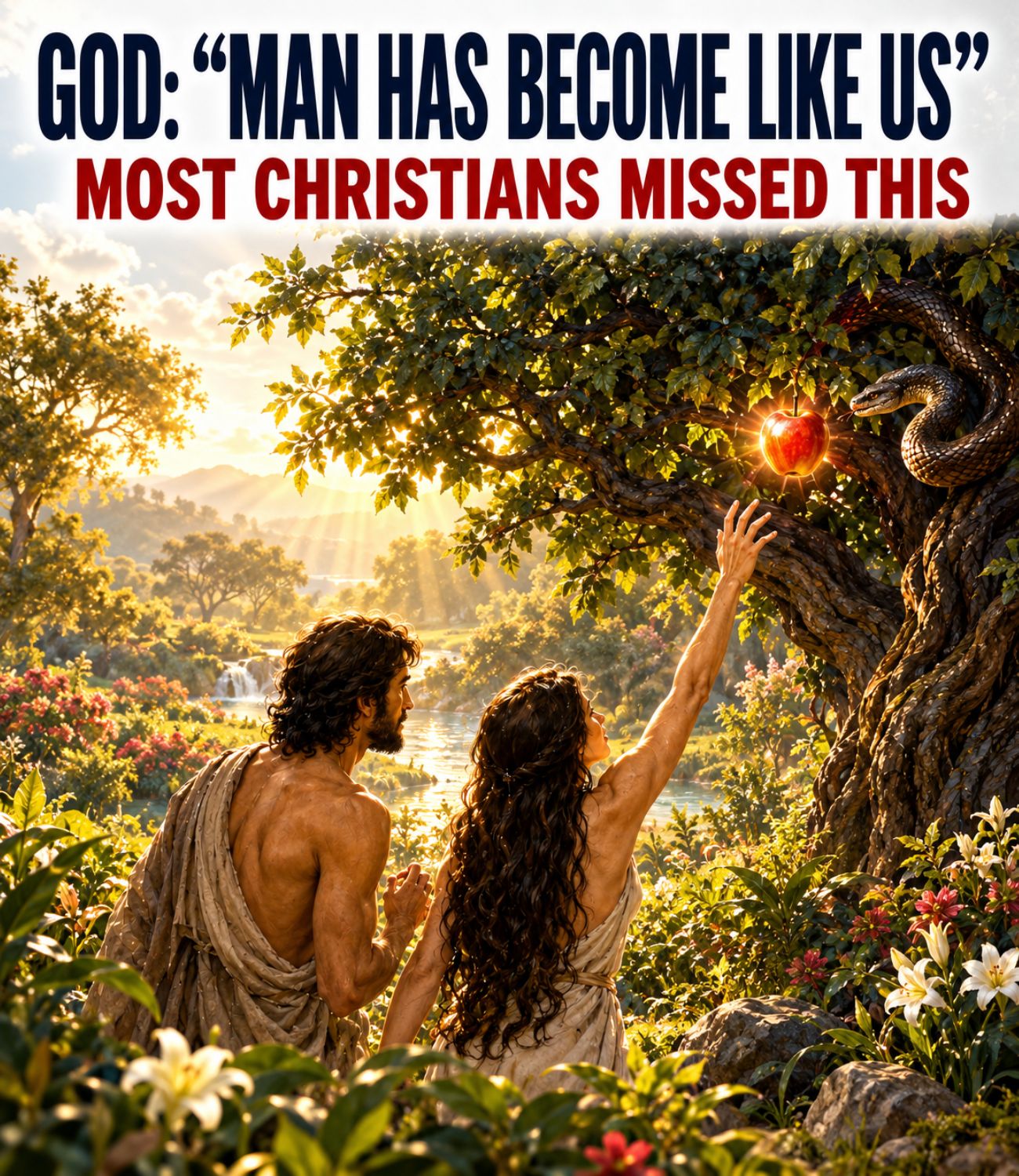
The Tree of the Knowledge of Good and Evil: The Real Story of the Garden
There is a garden full of trees, and only one of them is forbidden. Not the tallest, not the strangest, not the one glowing in the corner with some obvious mark of danger on it. Just one tree among thousands, and it has a name so long and so specific that most people never stop to actually read it.
The tree of the knowledge of good and evil.
Say it slowly. It is not called the tree of death. It is not called the tree of sin. It is called the tree of the knowledge of good and evil. And that name is the single most overlooked clue in the entire opening of the Bible, because most people hear this story and think they already understand it. A rule was given. A fruit was eaten. Paradise was lost. And somewhere along the way, a picture got painted in our minds of a shiny red apple and a woman who simply could not resist a snack.
That picture is not just incomplete. It is hiding the real story.
There is no apple anywhere in the Hebrew text, and the sin at the center of this garden was never really about eating.
So, let us do something most people never do with these three chapters. Let us slow all the way down and take that strange, specific name seriously. Because when you trace the phrase knowledge of good and evil through the rest of the Hebrew Bible, you discover that it is not talking about magic fruit or secret information at all. It is talking about the oldest and deepest temptation a human being can face: the temptation to be the one who decides.
And once you see it, you will never read Genesis the same way again.
The Name Itself: Etz Ha Da’at Tov V’ra
Let us start with the name itself, because the Hebrew is doing more than the English lets on. The tree is called in Hebrew etz ha da’at tov v’ra.
Etz is tree.
Tov v’ra is good and evil.
And in the middle sits that key word da’at, knowledge.
Now, here is the first thing most people never realize. The Hebrew word da’at comes from the root yada, and yada is not the cold, filing cabinet kind of knowing. It is not knowing a fact the way you know the capital of a country or a phone number.
Yada is the word the Bible uses for the most intimate, experiential, personal kind of knowing there is. It is the word used when a husband and wife come together and a child is conceived. It is the word used when God says of Abraham, “I have known him.”
To know in Hebrew is to enter into something, to be changed by it, to take it into yourself.
So, already the name is telling us something. This is not a tree that downloads information into your head like a book you read once and sat down. Whatever this knowledge is, it is the kind you become. It gets inside you. It rearranges you. Hold on to that because it matters more than it seems right now.
And before we go further, let us clear away that apple once and for all because it is a perfect example of how a tradition can quietly replace the text. Genesis never names the fruit. Not an apple, not a fig, not a pomegranate, nothing. The apple most likely entered Christian imagination centuries later, partly through a Latin pun because in Latin the word for evil and the word for apple look almost identical. It is a charming accident of language. But, it is not scripture.
And the reason this matters is simple: the moment you fixate on what kind of fruit it was, you have already missed the point. The tree was never about produce. It was about a name.
What Does “Good and Evil” Actually Mean?
So, let us take that name apart. Good and evil. Tov v’ra.
And here we run into something that scholars have argued about for a very long time. And I want to be honest with you about that because the honesty is where the discovery lives. There are several ways serious people have read this phrase and they do not all agree.
Some have read it as sexual awareness, pointing to the fact that right after eating, the couple suddenly notice they are naked.
Some have read it as omniscience, the knowledge of everything. And that second reading rests on something real in the Hebrew language. So, let us give it its due. In Hebrew, when you want to say “everything,” you often do it by naming two opposites. You pair the far ends of something and let them stand for the whole.
We do this in English, too:
When we say a person searched high and low, we do not mean only the ceiling and the floor. We mean everywhere.
When we say someone knows a subject backward and forward, we do not mean only two directions. We mean completely.
This figure of speech has a name. It is called a merism, and the Hebrew Bible is full of them. Heaven and Earth means all of creation. Young and old means everyone. So, when the text says knowledge of good and evil, some scholars argue that good and evil is a merism and that the tree offered the knowledge of everything. Total knowledge. The kind that belongs to God alone.
That reading is not wrong to notice the pattern. But, here is where it gets interesting because the Bible does not leave us to guess. The phrase to know good and evil actually shows up again in other places in the mouths of other people. And every time it appears, it points us toward one specific meaning. This is the key almost nobody uses, and it unlocks the whole thing.
The Evidence from Scripture
Deuteronomy 1:39: Moses is speaking to a generation of Israelites, and he refers to their youngest members this way. He calls them, and I am quoting, “Your little ones and your children, who today have no knowledge of good and evil.”
Read that again. The children have no knowledge of good and evil. Now, if this phrase meant sin, that would be a strange thing to say because children are perfectly capable of doing wrong. And if it meant information in general, that would also be strange because children learn facts constantly. But, it makes perfect sense if the phrase means something else: mature moral judgment. The developed ability to weigh a situation and discern for yourself what is right and what is wrong. Little children do not have that yet. That is not a knock on them. It is simply what it means to be a child.
2 Samuel 19:35: The confirmation shows up on the other end of a human life. An old man named Barzillai is offered a place in King David’s court, and he turns it down. He says he is 80 years old, and then he asks, “Can I still discern between good and bad?” The Hebrew behind discern between good and bad is the very same root, the very same idiom. And the point Barzillai is making is that in his old age, his powers of judgement and taste have faded. Children do not yet have the knowledge of good and evil. The very old can lose it. Which tells you exactly what kind of knowledge it is. It is not sin, and it is not trivia. It is the seasoned adult capacity to judge, to discern, to rule over a situation and call it rightly.
2 Samuel 14:17: A wise woman praises King David by saying he is like the angel of God in discerning good and evil. There it is again, tied to a king, tied to the work of judging and governing.
1 Kings 3:9: The young King Solomon prays for the one thing he most needs to rule well. He asks God, “Give your servant an understanding heart to judge your people, that I may discern between good and evil.”
Solomon, standing at the start of his reign, asks God for exactly the knowledge the tree seemed to offer: the knowledge of good and evil, the wisdom to govern, to weigh, to decide.
Now, here is the detail that should stop you cold. Solomon asks God for it. He does not reach out and take it. He kneels and requests it. And God is so pleased with the request that he grants it and adds riches and honor on top.
Hold that image in your mind—a man asking God for the knowledge of good and evil and receiving it as a gift—because we are about to walk back into the garden and watch someone try to get the very same thing a very different way.
Stepping Back Into the Garden
Let me pull this together before we do because this is the heart of it: the knowledge of good and evil everywhere else in the Bible means mature moral discernment. The capacity to determine for yourself what is good and what is harmful. It is the mark of a grown adult. It is the equipment of a wise king. It is in the deepest sense the ability to sit in the seat of judgment and rule.
And that changes the entire meaning of the tree.
The tree was not offering evil. It was not offering sin as a substance you could swallow. It was offering the power to be the one who decides what is good and what is evil. To move into the judge’s chair. To become morally autonomous, self-ruling, the author of your own definitions of right and wrong.
And there was nothing inherently ugly about that capacity. God was going to grow humanity into wisdom. Solomon shows us that God gives this gift gladly to those who ask. The problem was never the wisdom. The problem was the way it was taken and the one who dared to take it and the seat he was reaching for.
The Serpent and the Strategy
Now let us walk back into the garden and meet the one who framed the offer.
Genesis 3:1: Now the serpent was more cunning than any beast of the field which the Lord God had made.
And in the Hebrew the very first word describing this creature is a word play so deliberate you can feel the author grinning as he writes it. The word for cunning is arum. And just one verse earlier at the end of chapter 2, the man and his wife were described as naked. The Hebrew word for naked is arom.
Arum and arom. Cunning and naked. They sound almost identical. The author is placing them side by side on purpose, and the contrast is the whole point. The humans are arom, naked, exposed, open, innocent, without defenses. The serpent is arum, shrewd, covered, clever, layered. Two kinds of exposure and concealment set against each other in a single breath. The naive standing across from the shrewd. And you already know who is going to win that exchange if the naked ones try to play the shrewd one’s game.
Watch how the serpent works because he does not attack the tree directly. He goes after something underneath it. He asks the woman:
“Has God indeed said, ‘You shall not eat of every tree of the garden?'”
It is a distortion, a slight exaggeration meant to make God’s generous single restriction sound like a stingy total ban. And once she is drawn into the conversation, he makes his move:
Verse 4: “You will not surely die. For God knows that in the day you eat of it, your eyes will be opened, and you will be like God, knowing good and evil.”
There is so much packed into those two sentences. First, notice how precisely the serpent contradicts God. Back in chapter 2, God had said, “In the day that you eat of it, you shall surely die.” In Hebrew, that is an emphatic legal phrase, mot tamut—literally dying you shall die. The kind of doubled construction Hebrew uses to pass a death sentence. It is heavy, formal, final.
And the serpent takes that exact phrase and simply drops a word in front of it: Not dying you shall die. “You will not surely die.” He does not invent a new claim. He takes God’s own words and reverses them, which is what a lie usually is: not the opposite of the truth, but the truth bent just far enough to break.
And then comes the offer itself, and here is what most people miss about it. The serpent does not say, “Eat this and become a criminal.” He does not say eat this and gain the power to sin. He says, “You will be like God, knowing good and evil.” He dresses the whole thing up as an upgrade, as maturity, as becoming more, not less.
And in a strange and terrible way, he is not entirely lying. That is what makes it work. The most dangerous lies are the ones wrapped around a piece of the truth.
Verse 6: So, when the woman saw that the tree was good for food, that it was pleasant to the eyes, and a tree desirable to make one wise, she took of its fruit and ate. She also gave to her husband with her, and he ate.
Desirable to make one wise. She is not reaching for rebellion. In her mind, she is reaching for wisdom, for growth, for the very thing that made Solomon great. And that is the tragedy. The thing she wanted was not evil. Wisdom is good, discernment is good, growing up is good, but she reached for it on her own terms, at her own timing, by her own hand, in defiance of the only voice that could safely give it to her. She tried to seize as theft what God intended to give as a gift.
The Catastrophe of Getting What You Want
And now here is the detail that changes everything. She got it.
Jump ahead to the end of the chapter:
Genesis 3:22: Then the Lord God said, “Behold, the man has become like one of us, to know good and evil.”
Read that slowly, because it is one of the most startling sentences in the Bible. “The man has become like one of us, to know good and evil.”
God is not saying the serpent lied about the outcome. God is confirming it. They did gain the knowledge of good and evil. They did become in some real sense like one of us. The serpent told a lie, but the lie was built on a true prediction. Their eyes really were opened. They really did cross a line into a kind of knowing they did not have before.
So, if they got exactly what was promised, where is the catastrophe?
And this is the deepest layer of the whole story. The catastrophe is in how they got it and what it did to them. Look at the first thing their newly opened eyes actually see:
Verse 7: Then the eyes of both of them were opened, and they knew that they were naked. And they sewed fig leaves together and made themselves coverings.
The very first exercise of their new knowledge of good and evil is to look at themselves and render a verdict. And the verdict is shame. They seized the power to judge good and evil, and the first thing they judged was themselves. And they could not bear what they saw. The knowledge turned inward and condemned them. They wanted to sit in the judge’s seat, and the moment they did, they became the accused.
This is what makes the reading click into place. The tree was never a magic object. It was a decision about authority. It was the question of who gets to define good and evil.
Up until that moment, that seat belonged to God, and humanity lived in the freedom of trusting him to fill it. To eat from the tree was to say: “I will define it myself. I will be the reference point. I will decide what is good for me and what is evil for me, and I will not wait for you, and I will not ask.”
It was not the theft of an apple. It was an attempted coup in the moral universe. A grasping after the one seat that was never ours to take.
And if you have ever wondered why this ancient garden story still has such a grip on us, this is why. Because that temptation did not stay in Eden. It is the temptation of every single day.
Every time a human being looks at God’s word and says, “That may be good for others, but I will decide for myself what is good for me”—that is the tree.
Every time we take the role of final judge over our own lives, defining right and wrong by our own preference, and calling it freedom—that is the fruit.
The oldest temptation is not to do something wicked. It is subtler than that. It is to become the one who decides. To move ourselves quietly into the chair that belongs to God. That is why this story is first: everything that goes wrong afterward in the Bible flows from that one relocation of authority.
Mercy Hidden in Exile
Now watch the mercy hidden in what happens next because most people read the ending of Genesis 3 as pure punishment, and it is not. After God confirms that they now know good and evil, he says something that sounds harsh until you understand it:
Verse 22 continues: “And now, lest he put out his hand and take also of the tree of life and eat and live forever…”
And so God removes them from the garden and sets guardians at the entrance, and we tend to hear that as God slamming a door in anger. But look closer. There were two special trees in that garden, the tree of the knowledge of good and evil and the tree of life.
And God’s concern here is that fallen human beings, now carrying guilt and shame and broken judgment, might reach out and eat from the tree of life and live forever exactly as they now are—frozen in that broken state, immortal in their shame, deathless in their guilt with no way out, ever.
Barring them from the tree of life was not only a punishment; it was a rescue. Death, as terrible as it is, became the thing that would keep the wound from being permanent. It set a limit on the damage. It meant this fallen condition would not be the final word because the one thing worse than a fallen human being is a fallen human being who cannot die.
And that is the thread the whole rest of the Bible is going to pull on because the story does not end with a guarded garden. In the very last chapter of the Bible, in Revelation, the tree of life appears again. Its leaves are for the healing of the nations, and the way back to it, sealed off in Genesis, is thrown open once more. What was closed at the beginning is reopened at the end. The Bible is one story, and it is the story of getting back to that tree.
The Second Adam
Let me take a quiet second here because everything we are talking about—the Hebrew roots, the cross-references, the careful tracing of a single phrase from Genesis to Revelation—all of it represents hours of work in the original languages and the biblical text. If this kind of study is something you value, and maybe part of what you feel sitting here is that you would love to be someone who opens up the Bible this way for the people you love… to be the person your family and your friends can turn to when they have a real question about the Bible, and to actually have something deeply researched to hand them—that desire is a good one.
Now, let me show you the connection that for me is the part of this that stays with me most.
Because the tree posed a question: Will you grasp equality with God, or will you receive what God can give?
Adam grasped, and centuries later the Bible presents us with a second Adam who faced the same question and answered it the other way. In the letter to the Philippians 2:6, Paul writes about Jesus and the language is almost designed to echo the garden. He says of Christ that he, being in the form of God, did not consider it robbery to be equal with God, but made himself of no reputation, taking the form of a bondservant.
Sit with the difference:
Adam, who was a mere creature, reached up to seize equality with God, to grasp it like plunder.
Christ, who actually was equal with God, refused to clutch it, refused to treat it as something to be grabbed and held, and instead emptied himself and came down.
Adam tried to climb up by taking. Christ came down by giving. And where Adam’s grasping brought death into the world, Christ’s letting go brought life back into it.
That is the answer to the tree. The knowledge of good and evil, the right to sit in the seat of moral authority, was never something to be seized. It was something to be received in relationship, in trust, in the right order and the right time, the way Solomon received it on his knees.
Adam skipped the asking and went straight for the taking, and it cost him the garden. Christ reversed it. He is the one human being who never once tried to define good and evil on his own terms, who said not my will, but yours, who trusted the Father’s timing all the way to a cross. And in doing that, he opened the road back to the tree of life that the first Adam got us barred from.
Conclusion: Who Gets to Decide?
So, let us gather up what we have found:
The tree of the knowledge of good and evil was never about a piece of fruit, and the Hebrew never names an apple.
Da’at (knowledge) is the deep, personal, experiential kind of knowing that gets inside you and changes you.
The phrase knowledge of good and evil, everywhere else in the Bible, means mature moral discernment: the adult capacity to judge good and evil for yourself, the equipment of a king, the wisdom God gladly gives to those who ask him for it.
The tragedy of the garden was not that Adam and Eve wanted something evil. They wanted something good. They wanted wisdom, and they wanted to grow. But they reached for it as theft instead of receiving it as gift.
So, what does this mean for you right now?
First, it means the deepest temptation in your life is probably not the one you think it is. It is rarely some dramatic, obvious sin flashing a warning sign. It is the quiet, respectable temptation to become your own final authority, to take God’s clear word and file it under my opinion, to decide, in the small, private courtroom of your own heart, that you will be the judge of good and evil in your own life. That is the tree, and it is offered to you every single day, and it almost always looks like freedom.
Second, it means wisdom is meant to be received, not seized. Whatever you are longing for right now—and it may even be a good thing, a good thing wanted badly enough can still become a tree if you decide to take it on your own terms instead of trusting God for it in his. The question the garden asks is not only what do you want?, it is how will you reach for it? By grasping, like the first Adam, or by asking, like Solomon on his knees?
And maybe the part that stays with me most is this: the way back was never closed for good. God barred the tree of life in mercy, not in spite, so that our brokenness would not become permanent. And then he set the whole of history moving toward the moment when a second Adam would refuse to grasp what the first Adam stole, and would open that road again.
The garden is not the end of the story. It is the first chapter. And the tree that stands at the end of the Bible has its leaves out for the healing of the nations, and the flaming sword has been laid down.
The oldest question in the world is still the only one that matters: Who gets to decide what is good?
Adam answered it with his own hand. You get to answer it with your whole life. And the invitation to answer it the way Christ did, by trust instead of by grasping, is still open.